




Professional Whitehead Extraction: When You Should See a Dermatologist
whiteheads can feel harmless, but when they don’t clear despite careful skincare,
many people start wondering whether professional extraction is necessary.
While extraction can help in specific situations, it’s not always the first—or safest—step.
This guide explains what professional whitehead extraction actually involves,
when it’s appropriate, and when it’s better to focus on skin recovery instead.
What is professional whitehead extraction?
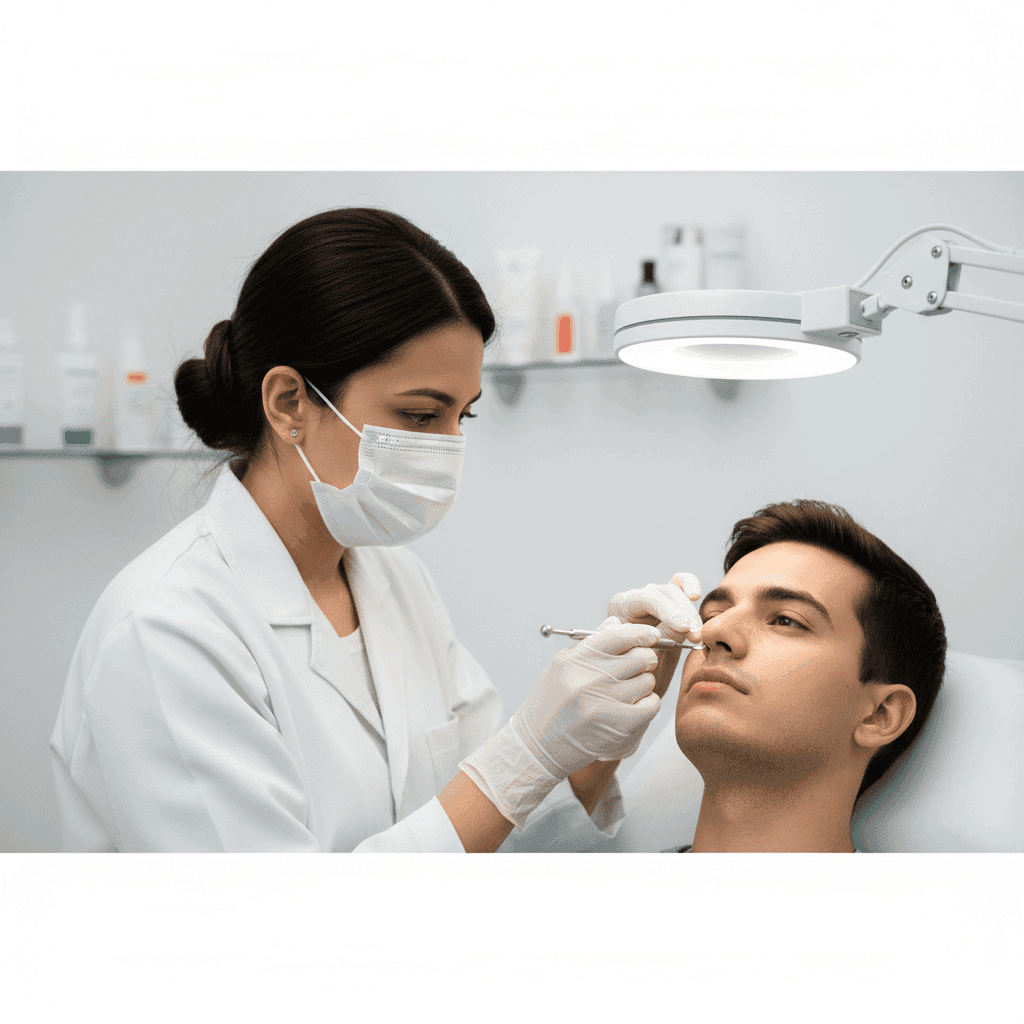
Professional extraction is a clinical procedure performed by a dermatologist
(or trained medical professional) to remove clogged material from pores using sterile tools.
Unlike at-home squeezing, professional extraction is done:
- Under controlled, hygienic conditions
- With proper skin preparation
- Using techniques that minimise trauma
It is usually combined with an overall treatment plan rather than used as a standalone solution.
Why at-home extraction is risky for whiteheads
Whiteheads are closed comedones.
The pore opening is sealed, which makes them especially prone to damage when forced.
At-home squeezing can:
- Push the blockage deeper into the skin
- Cause inflammation or infection
- Damage the skin barrier
- Lead to marks or long-term texture issues
This is why dermatologists strongly discourage self-extraction of whiteheads.
When professional extraction may be appropriate
A dermatologist may consider extraction if:
- Whiteheads are persistent despite consistent skincare for 8–10 weeks
- There is widespread congestion causing uneven texture
- Whiteheads frequently turn into inflamed acne
- Clogged pores are interfering with treatment progress
In these cases, extraction can help reset the skin so other treatments work better.
When extraction is usually not recommended
Professional extraction is often avoided when:
- The skin barrier is already irritated or inflamed
- There is active infection or [Cystic Acne](https://clearritual.com/blog/types-of-acne/all-about-cystic-acne)
- Whiteheads are mild and likely to respond to topical care
- The skin is extremely sensitive or compromised
In such situations, calming and repairing the skin takes priority.
What dermatologists focus on alongside extraction
Dermatologists rarely rely on extraction alone.
Instead, they focus on preventing whiteheads from forming again.
This often includes:
- Normalising skin cell turnover (e.g., retinoids when appropriate)
- Supporting the skin barrier
- Adjusting skincare routines and textures
- Addressing hormonal or lifestyle triggers if present
Without these steps, extracted whiteheads often return.
What to expect after professional extraction
After extraction, the skin may feel:
- Slightly sensitive
- Red for a short period
- Smoother once healed
Dermatologists typically advise gentle care afterward:
- Avoiding harsh actives for a few days
- Focusing on hydration and barrier repair
- Strict sun protection
How to know it’s time to see a dermatologist
Consider booking a consultation if:
- Whiteheads keep returning despite careful, consistent care
- You’re unsure which treatments are safe for your skin
- Texture issues are affecting confidence
- You suspect hormonal or medical triggers
A dermatologist can help decide whether extraction is necessary—or whether a different approach will work better.
Key takeaway
Professional whitehead extraction can be helpful in the right context,
but it’s not a shortcut or a cure.
The best outcomes come from combining medical guidance, barrier-focused care,
and patience—so whiteheads are managed safely and less likely to return.
Editorial Standards
Clear Ritual has Strict sourcing guidelines to ensure our content is accurate and current. We rely on peer-reviewed studies, academic research institutions, and medical associations. We strive to use primary sources and refrain from using tertiary references. See a mistake? Learn More about our Editorial Standards.



