




Whiteheads in Teenagers vs Adults: Why Treatment Must Differ
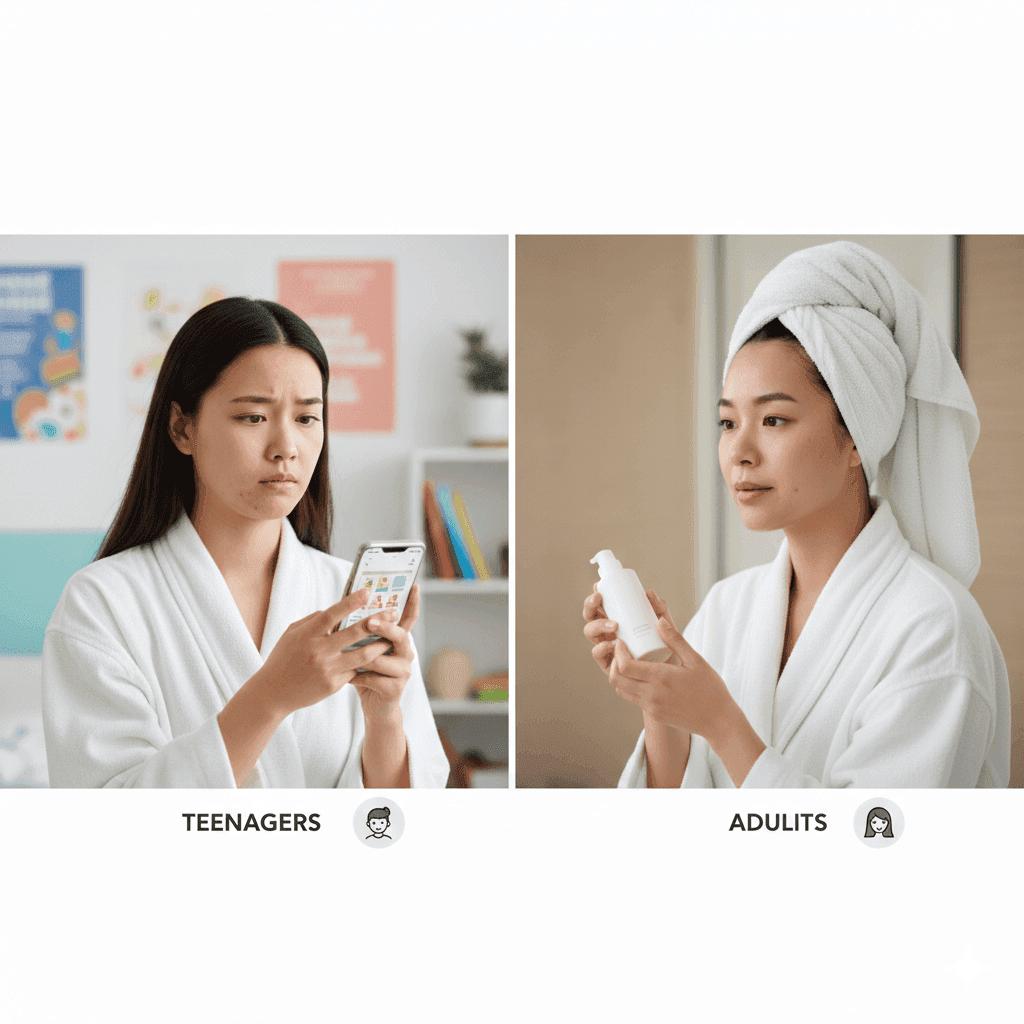
whiteheads are often thought of as a “teenage problem,” but many adults struggle with them too.
What’s commonly misunderstood is that whiteheads in teenagers and adults form for different reasons,
which means they shouldn’t be treated the same way.
Using the wrong approach—especially copying teen acne treatments for adult skin—can make whiteheads
more stubborn, irritating, and long-lasting.
What whiteheads have in common at every age
In both teenagers and adults, whiteheads are closed comedones.
They form when oil and dead skin cells get trapped inside a pore that stays closed.
However, the drivers behind this clogging change with age.
Why whiteheads are common in teenagers
During adolescence, the skin goes through major hormonal changes.
These directly affect oil production.
Main causes of whiteheads in teenagers
- Increased oil (sebum) production during puberty
- Hormonal fluctuations
- Genetic tendency toward acne
- Use of heavy or incorrect skincare products
Teen skin usually has a strong, resilient barrier but produces excess oil.
How whiteheads typically appear in teenagers
- Oily, shiny skin
- Whiteheads clustered on the forehead, nose, and chin
- Often accompanied by [blackheads](https://clearritual.com/blog/types-of-acne/all-about-blackheads) or inflamed acne
Best treatment focus for teenagers
- Gentle oil control (not harsh stripping)
- Simple routines with minimal products
- Controlled exfoliation if needed
- Avoiding picking or aggressive treatments
The goal is to manage oil while protecting developing skin.
Why whiteheads appear in adults
Adult whiteheads are less about excess oil alone and more about
skin barrier health, hormones, and lifestyle stress.
Main causes of whiteheads in adults
- Hormonal fluctuations (cycles, PCOS, stress)
- Slower skin cell turnover with age
- Barrier damage from over-exfoliation or strong actives
- Heavy skincare, makeup, or sunscreen
Adult skin is often more sensitive and slower to recover than teenage skin.
How whiteheads typically appear in adults
- Persistent bumps without redness
- Texture issues rather than inflamed acne
- Common on the jawline, cheeks, or chin
- May coexist with dryness or sensitivity
Best treatment focus for adults
- Barrier repair and protection
- Gentle, infrequent exfoliation
- Lightweight but nourishing moisturisers
- Stress and lifestyle support
For adults, calming the skin often improves whiteheads more than aggressive treatment.
Why teen acne products often fail for adults
Many acne products are designed for oily, resilient teenage skin.
On adult skin, these products can:
- Over-dry the skin
- Damage the skin barrier
- Trigger more oil rebound
- Worsen long-term congestion
This leads to a cycle where whiteheads keep returning despite treatment.
Why adult skincare can be too heavy for teenagers
On the other hand, rich anti-ageing or barrier-repair products
can overwhelm teenage skin.
This may:
- Clog pores easily
- Increase whiteheads and blackheads
- Make skin feel greasy or congested
How treatment must differ by age
- Teenagers: focus on oil balance, simplicity, and habit correction
- Adults: focus on barrier health, gentle turnover, and consistency
Age-appropriate care prevents both over-treatment and under-treatment.
When to see a dermatologist
For both teens and adults, professional guidance may help if:
- Whiteheads persist despite consistent care
- They frequently turn inflamed
- There are strong hormonal patterns
- Skin becomes sensitive or irritated easily
Key takeaway
Whiteheads may look similar at any age, but they don’t behave the same way.
Teen skin is oil-driven and resilient, while adult skin is barrier-sensitive and slower to recover.
Matching treatment to age and skin biology—not just the presence of whiteheads—
is what leads to clearer, healthier skin over time.
Editorial Standards
Clear Ritual has Strict sourcing guidelines to ensure our content is accurate and current. We rely on peer-reviewed studies, academic research institutions, and medical associations. We strive to use primary sources and refrain from using tertiary references. See a mistake? Learn More about our Editorial Standards.



