




Acne: Types, Causes, Treatments and Prevention
Summary
Acne is a common skin condition that happens when pores get blocked by excess oil, dead skin cells, and bacteria. It can be influenced by hormonal changes, stress, diet, and genetics, and it can affect people at any age.
It doesn't look the same on everyone. Some people get blackheads and whiteheads, others get red bumps, deep painful lumps, or cysts. Each type has a different cause, so what works for one person may not work for another.
For mild to moderate acne, ingredients like salicylic acid, benzoyl peroxide, and retinoids are usually a good starting point. If your acne is deeper or hormonal, a doctor may recommend antibiotics, hormonal treatment, or isotretinoin.
Acne is one of the most common skin concerns, but many people treat it the wrong way for years. Not because they are not trying, but because they are only treating what they can see.
A spot treatment, a face wash, a cream on a pimple, these things do help. But they don't touch the reason the breakout showed up in the first place. And when something inside your body is driving it, whether that's a hormonal shift, a nutritional gap, or just chronic stress, what you put on your skin is only a surface level treatment.
This guide covers everything you need to know: the definition of acne, how it forms, the different types of acne, its causes and triggers, the symptoms to watch for, and the most effective approaches to acne treatment and long-term prevention.
What Is Acne?
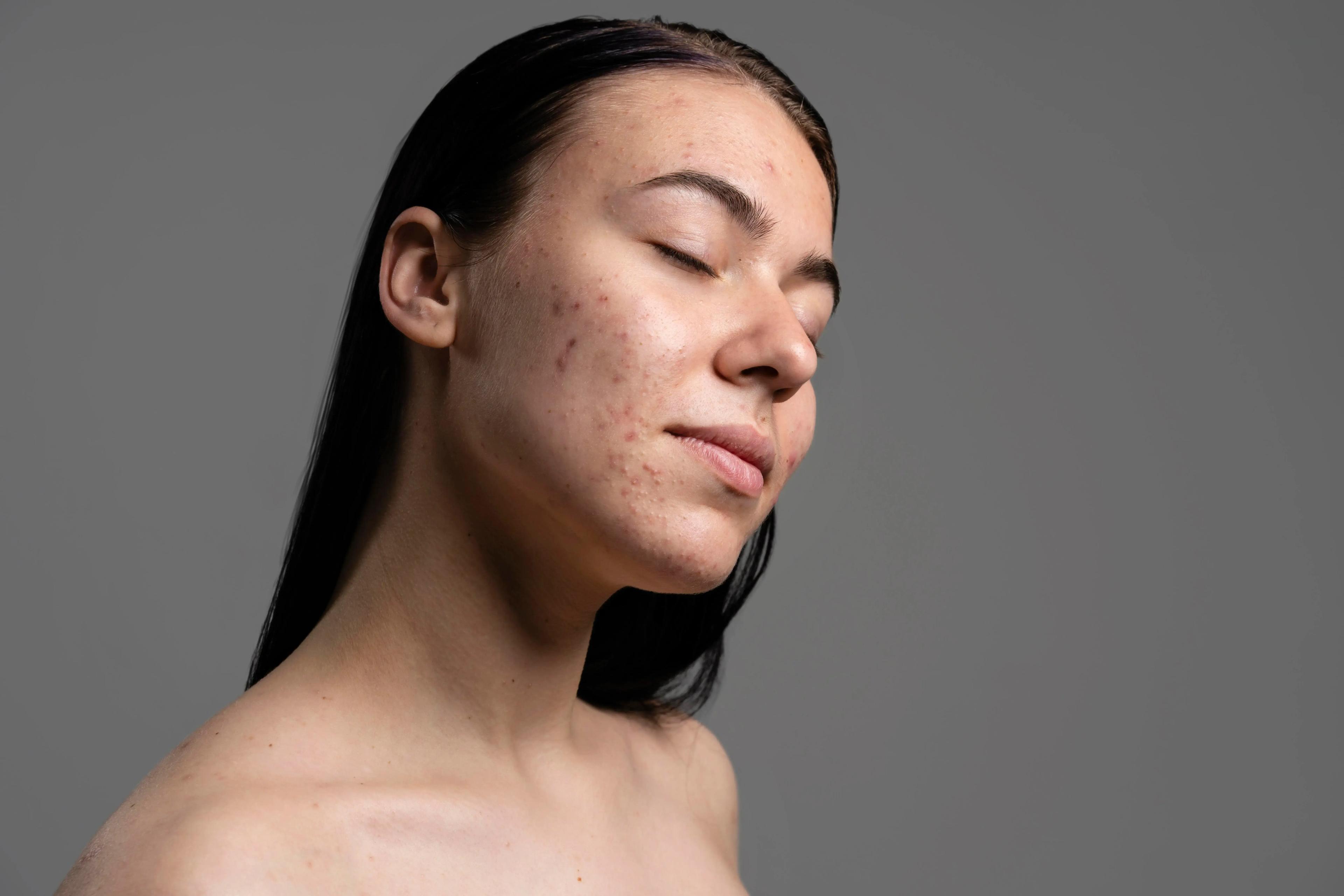
Acne is a skin condition that occurs when pores become blocked, causing breakouts on the skin. Breakouts may appear as tiny bumps, whiteheads, blackheads, red pimples, or painful lumps deep beneath the skin.
One of the most important things to understand is that acne is not caused by poor hygiene. Washing your face over and over will not make it go away. In most cases, acne begins beneath the skin and is linked to factors such as excess oil, a buildup of dead skin cells, acne-causing bacteria, inflammation, and hormonal changes.
What Causes Acne?
There is no single cause of acne. It usually happens when several things go wrong at the same time, inside and outside the body.
The most common reasons include:
- The oil glands in your skin producing too much oil
- Dead skin cells building up inside the pores instead of shedding naturally
- Bacteria growing inside clogged pores
- Hormonal changes during puberty, periods, or conditions like PCOS
- A diet high in sugar, white rice, bread, or dairy
- Chronic stress
- Poor gut health
- Skincare or makeup products that clog pores
- Pollution, humidity, and heat
- Certain medications
- A family history of acne
How Does Acne Develop?
Every pore is attached to a tiny oil gland. Usually, oil flows out smoothly. However, sometimes things can get off-track. There could be an oil surge or a buildup of sticky skin cells. Then, a 'plug' forms.
That plug is the starting point for every breakout.
How Does a Blocked Pore Become a Pimple?
Once a blockage has formed, the pore isn't a pimple already. Bacteria are the key factor.
Bacteria naturally occur on the skin's surface. Once a pore becomes blocked with plugs, bacteria begin replicating in that area. An immune response follows this development, creating a pimple.
If the reaction occurs deeper under the skin rather than on the surface, a nodule or a cyst can develop. These are usually serious cases of acne, and leave scars.
Different Types of Acne
All types of acne fall into two broad groups: non-inflammatory, in which the pore is blocked but the immune system is not involved, and inflammatory, in which bacteria trigger a reaction.
Non-Inflammatory Acne
Non-inflammatory acne occurs when pores are blocked but the immune system has not yet reacted. There is no redness, no swelling, no pain. What you see are small bumps sitting on the surface, easy to miss unless you look closely.
| Type | What It Looks Like |
|---|---|
| Blackheads | Open, blocked pores. The dark colour comes from the oil inside reacting with the air. |
| Whiteheads | Blocked pores covered by a thin layer of skin. They appear as small, skin-coloured bumps. |
Inflammatory Acne
Inflammatory acne is when the pores are infected with bacteria. The immune system is responding, and the result is visible redness, swelling, and in some cases, real pain. The deeper it goes, the more serious it becomes.
| Type | What It Looks Like |
|---|---|
| Papules | Raised, red or pink bumps. Tender to touch, no pus inside. |
| Pustules | Red bumps with a white or yellow centre. What most people picture when they think 'pimple.' |
| Nodules | Large, hard lumps deep under the skin. Very painful and more likely to leave marks. |
| Cysts | The most severe type. Soft, fluid-filled lumps that sit deep below the surface. These always need medical treatment. |
Hormonal Acne
Hormonal acne appears on the lower face, particularly the chin and jawline, and tends to worsen in the week before a period. It is closely linked to PCOS and elevated stress hormones. Because it is driven by what is happening inside the body, applying products to the skin alone rarely resolves it.
Fungal Acne
Fungal acne is commonly misdiagnosed. It is caused by a yeast overgrowth on the skin, not bacteria, and it looks like small, uniform, itchy bumps on the forehead, chest, or back. Standard acne treatments do not work on it. It requires an anti-fungal approach.
What Triggers Acne From the Inside Out?
Triggers can be classified into two types; these include internal, or the happenings within your body and external, or what happens outside your body.
Internal Triggers
Sometimes, due to hormonal imbalance or higher stress, our body can react and trigger an acne breakout. Even our diet, like oily food, can trigger acne as a reaction to poor lifestyle or diet choices. Listed below are the internal triggers of acne:
- Fluctuations in hormones, such as the sudden release of male hormones, stimulate the sebaceous glands to produce excessive sebum, thereby creating ideal conditions for bacterial growth.
- Consuming foods high in sugar causes insulin and IGF-1 spikes that increase oil production and block pores much faster.
- Elevated stress levels cause the production of the stress hormone cortisol, which leads to excessive oil secretion by the oil glands and promotes inflammation.
- An unhealthy gut and liver function cause an overloaded system to store excessive waste and hormones that the body attempts to get rid of by using skin as its dumping ground.
External Triggers
Not all acne triggers come from within. Your environment and daily habits also play a role. External triggers of acne include:
- Heavy or 'comedogenic' products physically block the follicles, leading to the accumulation of oil beneath the blockage.
- Pollutants and tiny particles clog pores along with accumulated sebum, creating oxidative and chemical stress that leads to inflammation.
- Excessive heat increases sebum production, while humidity inhibits sweat evaporation, creating a greenhouse effect within your pores.
- Some drugs, such as steroids and some types of hormonal birth control, interfere with your body chemistry, promoting oil gland production or altering skin cell regeneration.
Common Symptoms of Acne
The signs of acne vary depending on the type. Most people experience a combination of the following:
- Blackheads and whiteheads, most often on the nose, chin, and forehead.
- Red, raised bumps that are sore when touched.
- Pimples with a visible white or yellow centre.
- Deep, painful lumps under the skin that never come to a head.
- Oily skin, particularly across the forehead, nose, and chin.
- Dark spots or patches left behind after a breakout, which are especially common in Indian skin tones.
When do symptoms point to something more serious?
Most acne responds well to the right routine. However, some situations require professional attention, like:
- Nodules or cysts that are consistently painful and not clearing up
- Acne that is spreading rapidly across the face, back, or chest
- Breakouts that are leaving permanent marks behind
- No improvement after 8 to 12 weeks of over-the-counter treatment
The earlier acne is treated correctly, the lower the risk of long-term marks. If any of the above apply, a dermatologist consultation is the right next step.
How Is Acne Diagnosed?
When a dermatologist examines your skin, they can identify acne when they look at the breakout pattern or how to bump looks. As such, the dermatologist doesn’t need to do any scan or a lab test. For acne, they will look at what type of acne it is (hormonal or bacterial) and the breakout severity. Based on the type of acne and talking to you about your lifestyle, the doctor can get an idea of the likely cause of the acne.
What Does a Dermatologist Look For?
During an examination, the dermatologist will first look at the way the acne breakout has distributed through the skin. After that, if there is one or two deep acne, the doctor will examine the depth of the acne to identify if it has a head or if it is a growing bump. Also, the location of the acne breakout - that is - whether it is on the face, back or chest helps them understand how much surface area the acne breakout has taken place. To identify the probable cause, the doctor will ask about your hormonal history, what is your general diet, if there has been any lifestyle changes, stress levels, and previous treatments.
Since acne can be environmental and hormonal, the doctor tries to get a larger picture. This helps them determine whether the acne is primarily bacterial, hormonal, or fungal. Each type of acne responds to a different treatment strategy.
When Are Additional Tests Needed?
A visual assessment generally is enough for most cases. But further investigation may be recommended if:
- You may not have had acne before. However, it has suddenly appeared in adulthood, even though there has not been any lifestyle changes.
- You have conditions like PCOS which can result in many hormonal changes.
- You have a clean diet and have not had lifestyle changes, that is, no triggers, but yet acne has appeared. Plus, multiple treatments have not given fruitful results.
- Along with acne, you have other symptoms like weight changes, irregular periods or even excessive hair growth.
In most of these cases, the indicator is some kind of hormone imbalance. For that reason, the doctor may conduct a blood test to check hormone levels before building an effective acne treatment plan.
How Do You Treat Acne?
You can treat acne using acne-friendly products, oral medication, or topical treatments, depending on severity.
Acne treatment should be done after examining the actual type of acne and what could be the root cause.
Here are the most effective options available.
Products You Apply on Your Skin
These are usually the first step for mild-to-moderate acne. The ingredients with the strongest evidence behind them include:
- Salicylic acid: This is one of the common formulations. Salicyclic acid helps because it can get in the pore and break down the buildup of oil and dead skin cells. As a result, there are no bumps or even inflammation.
- Benzoyl peroxide: Since several acne can happen due to bacteria, benzoyl peroxide kills the bacteria which can cause a breakout. It also helps by reducing swelling.
- Niacinamide: This has a calming effect on skin. It helps in regulating the amount of oil our skin produces and also, lower irritation and redness.
- Azelaic acid: Azelaic acid helps in targeting bacteria. It also reduces redness, and fades the dark spots left behind.
- Retinoids: often, dead skin blocks pores and causes inflammation. Retinoids can help speed up the natural shedding cycle of our skin and so, pores do not get blocked.
Oral Treatments
When topical products are not sufficient for the acne, a doctor may prescribe:
- Antibiotics like doxycycline, which reduce bacterial activity and calm the skin's response
- Hormonal treatments including certain contraceptive pills or hormone-regulating medicines, which work well for hormonal acne in women
- Isotretinoin, the strongest available option for severe deep acne, which can lead to long-term clearance under medical supervision
In-Clinic Procedures
When you have severe acne, then there are certain procedures that you may have to go for to treat the condition. Procedures include:
- Chemical peels: Exfoliate deeply, clear blocked pores, and fade dark marks
- HydraFacial: Combines deep cleaning and nourishment in a single session
- Laser and light therapy: Targets bacteria, reduces the skin's response, and helps repair scarring.
Can You Prevent Acne From Coming Back?
Long-term prevention comes down to consistent habits that address both the skin and what is driving it internally.
- Cleanse gently twice a day and use a sunscreen that does not clog pores.
- Cut back on sugary foods, refined carbs, and dairy.
- Prioritise sleep and find a consistent way to manage stress.
- Avoid touching your face and change your pillowcase regularly.
- Check all skincare and hair products for pore-clogging ingredients.
- See a professional if breakouts involve deep cysts, are leaving marks, or have not improved in 8 to 12 weeks.
How Do You Find the Right Acne Treatment for Your Skin?
The most effective prevention and care strategies depend on understanding your unique acne type and its specific triggers.
This is crucial because no two individuals experience acne in exactly the same way. For example, two people with similar breakouts might have vastly different root causes , one could be dealing with hormonal imbalances, while the other might have issues stemming from gut health. Treating both cases the same way is unlikely to yield effective results.
Clear Ritual was created to address this need for tailored solutions.
Leveraging a blend of Ayurvedic principles, modern dermatology, and cutting-edge cosmetic science, it develops comprehensive plans that target not just the surface of the skin but also the internal factors driving acne.
Using an AI-powered skin assessment, Clear Ritual analyzes your acne type, internal triggers, hormonal history, and lifestyle habits.
In just a few minutes, the test gathers detailed information about external skin concerns and internal factors such as stress levels, diet, and gut health. Based on this analysis, it generates a customized product kit paired with access to a dedicated skin advisor for continued support.
The plan is reviewed monthly to adapt to changes in your skin’s condition, ensuring it remains effective over time.
Take the Clear Ritual Skin Test and receive a plan built specifically around your skin.
Frequently Asked Questions
Is it possible to cure acne or does it come back even as an adult?
Acne is a skin condition and it is also an immune response. As a result, it is not something that can be cured completely. But it is manageable. During adolescence, due to hormonal changes, acnes breakouts can be common. However, as an adult, with the right skin care that cleans your pores and also the right diet, breakouts can become very rare. With acne, the idea should be to manage it, not to go for a complete cure.
Is it possible to identify what type of acne I have?
Yes, you can analyse your acne type by looking at how they look and also how the skin appears around the acne. Each type shows whether it is hormonal, bacterial or fungal. First, you have to look whether there are blocked pores or not. If there is a skin-coloured flat bump, it is indicating that a pore is blocked. Inflammation takes place when the bump gets red. If the bump has a yellow or white center, then the acne has developed a head and might pop.
Deep and painful lumps are the ones which can be a problem as it can take time to resolve. Sometimes, when you are nearing your periods, breakouts can happen along the chin or jaw, which indicates hormonal acne. Bumps with a slight itch on your forehead or chest can indicate fungal acne if they do not go away after using regular products.
Is there any change in my treatment plan based on if my acne is hormonal or bacterial?
Treatment plans will change based on what kind of acne you have. If you have hormonal acne, then the reason could be diet or your environment. Since hormones are an internal factor, you might need supplements or a change in diet to treat hormonal acne. Bacterial acne happens when foreign bodies like bacteria traps or develop in your pore. For bacterial acne, you can use topical ingredients like benzoyl peroxide and salicylic acid. Both are different treatment plans, and using the wrong treatment, can make the acne worse.
If I start with an acne treatment, how long would it take till I see results?
When you are consistent with an acne treatment, you might be able to see your skin clearing up after 4 to 8 weeks. However, for proper skin management, it might take 3 to 4 months. The reason is, your skin renews itself around every 28 days. So, when you are applying a treatment regularly, you need your skin to adapt to the treatment. Many stop early and hence, do not see results or notices breakouts happening again.
Does diet actually affect acne, or is it a myth?
Diet does affect acne and there is research to back that up. Sugary foods cause a spike in blood sugar which leads to more oil production and more breakouts. Dairy is also a known trigger for many people. Cutting back on sugar and dairy can make a noticeable difference within 4 to 6 weeks for a lot of people. It won't clear everything on its own but it does help.
At what age does acne usually stop, and can adults get it too?
There is no set age when acne just stops. Many people see improvement in their late teens or early 20s, but plenty of adults, especially women, still deal with it in their 30s, 40s, and beyond. Adult acne is often hormonal which makes it more persistent because the cause doesn't go away on its own.
Citations
Editorial Standards
Clear Ritual has Strict sourcing guidelines to ensure our content is accurate and current. We rely on peer-reviewed studies, academic research institutions, and medical associations. We strive to use primary sources and refrain from using tertiary references. See a mistake? Learn More about our Editorial Standards.



