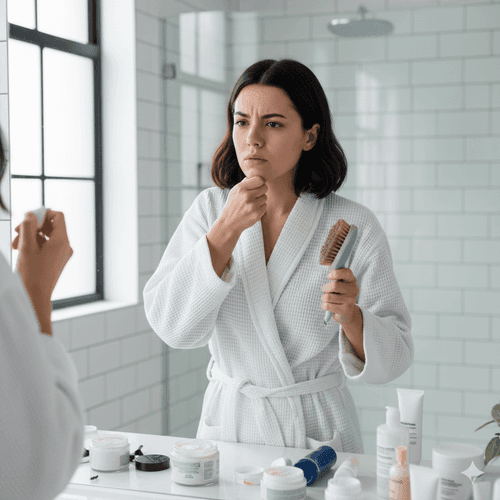
Ingredients That Can Trigger Breakouts

Even products labeled for sensitive skin can cause breakouts if they contain pore-clogging or irritating ingredients. Common culprits include heavy oils, silicones, fragrances, and certain alcohols that disrupt the skin barrier or trap sebum inside follicles, leading to inflammation and formation of acne .
Key Takeaways:
- Comedogenic ingredients physically block pores and trap oil and dead skin cells
- Irritating ingredients weaken the skin barrier and trigger inflammatory breakouts
- Individual tolerance varies based on skin type, barrier health, and existing inflammation
- Reading ingredient lists helps avoid repeat reactions and supports clearer skin over time
What Happens When an Ingredient Triggers a Breakout
Your skin produces sebum naturally to protect and lubricate the surface. When certain ingredients sit on top of the skin or penetrate into follicles, they can either physically block the opening or trigger an inflammatory response. This creates an environment where sebum cannot exit normally, dead skin cells accumulate, and bacteria like Cutibacterium acnes multiply rapidly. The immune system responds with inflammation, resulting in papules, pustules, or cysts depending on the depth and severity of the reaction.
Not all breakout-triggering ingredients work the same way. Some are comedogenic, meaning they have a molecular structure that physically blocks pores. Others are sensitizers that disrupt the lipid barrier or provoke immune reactions, even if they do not clog pores directly. Understanding this difference helps you identify which products might be contributing to ongoing skin issues.
Categories of Breakout-Triggering Ingredients
Heavy Oils and Butters
Certain plant oils and butters have a high comedogenic rating, meaning they are more likely to obstruct follicles. Coconut oil, cocoa butter, and wheat germ oil are frequently found in acne-safe moisturisers and cleansing balms but can cause congestion in people prone to breakouts. These ingredients have a thick molecular structure that does not absorb well into oily or combination skin types. When they sit on the surface, they mix with sebum and dead skin cells, creating plugs that lead to whiteheads and blackheads.
On the other hand, lighter oils like squalane, rosehip seed oil, and argan oil tend to absorb more easily and are less likely to cause issues for most people. However, individual reactions vary, and what works for one person may still trigger breakouts in another.
Silicones and Occlusives
Silicones like dimethicone and cyclopentasiloxane are commonly used in primers, foundations, and moisturizers to create a smooth, even texture. While they are not inherently comedogenic, they form a barrier on the skin that can trap sebum, sweat, and bacteria underneath. This is especially problematic for people with oily skin or those who sweat frequently, as the occlusive layer prevents natural shedding of dead skin cells and clearance of follicular debris.
Other occlusive ingredients like petrolatum and mineral oil can have similar effects. They are effective at preventing water loss, but when used excessively or on already congested skin, they contribute to microcomedones that eventually become visible breakouts.
Fragrance and Essential Oils
Fragrance ingredients, whether synthetic or natural, are common sensitizers. They can provoke inflammatory responses that weaken the skin barrier and increase susceptibility to irritation and acne. Lavender oil, peppermint oil, citrus oils, and eucalyptus oil are frequently added to skincare products for scent but can cause redness, itching, and breakouts in sensitive or reactive skin types.
Even products labeled "unscented" may contain masking fragrances, which are used to neutralize the natural smell of raw ingredients. These still pose a risk for people prone to inflammatory acne or conditions like rosacea, where barrier integrity is already compromised.
Alcohols and Astringents
Denatured alcohol, isopropyl alcohol, and SD alcohol are drying agents often found in toners, acne treatments, and mattifying products. While they reduce surface oil temporarily, they strip the skin of natural lipids, which triggers rebound sebum production. This cycle of over-drying followed by excess oil can worsen breakouts over time.
Fatty alcohols like cetyl alcohol and stearyl alcohol, however, are emollients and are generally non-irritating. The confusion between alcohol types causes many people to avoid beneficial ingredients unnecessarily. The key is identifying which alcohols are volatile and which are moisturizing.
Thickeners and Emulsifiers
Ingredients like carrageenan, sodium lauryl sarcosinate, and certain gums are used to stabilize formulas and create texture. Some of these can be irritating, especially in cleansers and face washes where they remain in contact with the skin for extended periods. Sodium lauryl sulfate, in particular, is a harsh surfactant that disrupts the acid mantle and lipid barrier, increasing transepidermal water loss and making skin more vulnerable to bacterial overgrowth and inflammation.
Fatty Acids and Esters
Oleic acid, myristic acid, and isopropyl myristate are commonly found in creams and lotions. Oleic acid is naturally present in many plant oils and can penetrate into follicles, where it mixes with sebum and contributes to comedone formation. Isopropyl myristate is a synthetic ester used to enhance absorption, but it has a high comedogenic rating and is a frequent culprit in foundation and sunscreen-related breakouts.
How Skin Type and Barrier Health Affect Ingredient Tolerance
People with oily or acne-prone skin tend to have more reactive responses to comedogenic ingredients because their follicles already produce more sebum and have a higher baseline level of activity. When a pore-blocking ingredient is introduced, the follicle becomes overwhelmed more quickly.
Those with compromised skin barriers, whether from over-exfoliation, harsh treatments, or environmental damage, are more susceptible to irritant-induced breakouts. When the barrier is weak, even non-comedogenic ingredients can trigger inflammation if they penetrate too deeply or provoke an immune response. This is why someone might tolerate an ingredient for months and then suddenly react after a period of stress, illness, or increased sun exposure.
Dehydration also plays a role. When the skin lacks water, it compensates by producing more oil, which increases the likelihood that occlusive or heavy ingredients will cause congestion. Sleep deprivation and high cortisol levels further impair barrier repair and immune regulation, making the skin more vulnerable to both comedogenic and irritating ingredients.
Common Products That Contain Breakout Triggers
| Product Type | Common Problematic Ingredients | Why They Cause Issues |
|---|---|---|
| Moisturizers | Coconut oil, isopropyl myristate, cocoa butter | Trap sebum, block follicles, slow cell turnover |
| Sunscreens | Mineral oil, dimethicone, chemical filters in heavy bases | Occlusive, mix with sweat and sebum |
| Foundations | Silicones, talc, bismuth oxychloride | Create barrier, trap debris, irritate follicles |
| Hair products | Silicones, oils, sulfates | Migrate onto forehead, jawline, and back |
| Cleansers | Sodium lauryl sulfate, fragrance | Strip barrier, provoke inflammation |
How to Identify Which Ingredient Is Causing Breakouts
Start by reviewing the ingredient list of any new product introduced within the past two to six weeks. Breakouts from comedogenic ingredients often appear as small, painless whiteheads or blackheads concentrated in areas where the product was applied. Irritant-induced breakouts tend to be red, inflamed, and accompanied by itching or burning.
Keep a simple skincare log noting product names, application dates, and any changes in skin texture or breakouts. This helps you spot patterns over time. If you suspect a specific ingredient, eliminate all products containing it for at least four weeks to observe whether your skin improves.
Patch testing new products on a small area, such as the jawline or behind the ear, can help identify reactions before applying them to the entire face. However, some ingredients only cause issues when combined with heat, sweat, or friction, so patch tests are not foolproof.
Ingredients That Are Generally Well-Tolerated
While individual tolerance varies, certain ingredients have low comedogenic ratings and are less likely to provoke breakouts:
- Hyaluronic acid: attracts water without blocking pores
- Niacinamide: reduces inflammation and regulates sebum
- Glycerin: humectant that hydrates without occlusion
- Squalane: lightweight oil that mimics skin's natural lipids
- Ceramides: support barrier repair without clogging follicles
These ingredients work with the skin's natural processes rather than creating a heavy layer or triggering immune responses.
When Breakouts Persist Despite Ingredient Changes
If you have removed suspected triggers and breakouts continue, the issue may involve factors beyond topical ingredients. Hormonal fluctuations, gut microbiome imbalances, chronic stress, and internal inflammation all influence sebum production and immune responses in the skin. High glycemic diets and dairy consumption have been linked to increased breakouts in some individuals, though responses are highly individual.
Friction from masks, hats, or phone contact can also cause mechanical acne, especially when combined with occlusive skincare products. Sweat that is not cleansed promptly mixes with oils and dead skin cells, creating an ideal environment for bacterial overgrowth.
Understanding Internal Triggers: Clear Ritual's Perspective
While avoiding comedogenic ingredients helps reduce surface-level congestion, breakouts are often driven by multiple internal and external factors working together. Hormones, sebum regulation, inflammation pathways, barrier integrity, stress responses, and microbiome balance all contribute to acne development. Topical changes may improve symptoms, but they do not always address the underlying triggers. At Clear Ritual, we combine the best of three worlds - Ayurveda, modern dermatology, and advanced skin science - to understand individual triggers through a structured Clear Ritual Skin Test. This approach helps identify patterns that might not be obvious through ingredient elimination alone. Long-term skin stability comes from recognizing how internal and external factors interact, rather than focusing solely on product formulations.
Frequently Asked Questions
1. Can non-comedogenic products still cause breakouts?
Yes. Non-comedogenic ratings are based on general testing, but individual skin chemistry, barrier health, and existing inflammation can cause reactions even to ingredients that are typically well-tolerated. Sensitivity varies widely.
2. How long does it take for a comedogenic ingredient to cause a breakout?
It depends on the ingredient and your skin type. Some reactions appear within days, while others take weeks as microcomedones gradually become inflamed. Heavy occlusives may cause noticeable congestion faster than lighter irritants.
3. Are natural ingredients less likely to cause breakouts?
Not necessarily. Many natural oils and plant extracts are highly comedogenic or irritating. Coconut oil, cocoa butter, and essential oils are common natural ingredients that frequently trigger breakouts in acne-prone skin.
4. Should I avoid all silicones if I am acne-prone?
Not all silicones cause problems, but if you notice congestion after using silicone-heavy primers or moisturizers, try eliminating them for a month. Lighter formulas with breathable bases may work better for oily or combination skin.
5. Can hair products cause face and body breakouts?
Yes. Hair products containing silicones, oils, and sulfates can migrate onto the forehead, temples, jawline, neck, and back, especially during sleep or sweating. This is a common cause of persistent breakouts in these areas.
6. What should I do if I cannot identify which ingredient is causing breakouts?
Simplify your routine to a gentle cleanser, a lightweight moisturizer, and a sunscreen. Introduce one new product at a time and wait four weeks before adding another. This method helps isolate potential triggers more accurately.
7. Do breakouts from ingredients go away once I stop using the product?
In most cases, yes. Comedogenic breakouts typically resolve within a few weeks once the ingredient is removed and the skin can clear trapped debris. Irritant-induced breakouts may fade faster once the inflammatory trigger is eliminated.
8. Can stress make my skin more reactive to certain ingredients?
Yes. Stress increases cortisol, which impairs barrier function and immune regulation. This makes skin more vulnerable to both comedogenic and irritating ingredients, even if you tolerated them previously without issue.
Editorial Standards
Clear Ritual has Strict sourcing guidelines to ensure our content is accurate and current. We rely on peer-reviewed studies, academic research institutions, and medical associations. We strive to use primary sources and refrain from using tertiary references. See a mistake? Learn More about our Editorial Standards.
Related Articles
Acne and Diet: What’s the Real Link Between Food and Breakouts?
Published June 5, 2026

Do Sunscreens Cause Whiteheads? How to Choose the Right SPF
Published May 26, 2026

Can Face Masks Cause Whiteheads? Ingredients to Watch Out For
Published June 7, 2026

Common Skincare Mistakes That Worsen Whiteheads
Published May 26, 2026