




Should You Pop Whiteheads? Why Dermatologists Say No
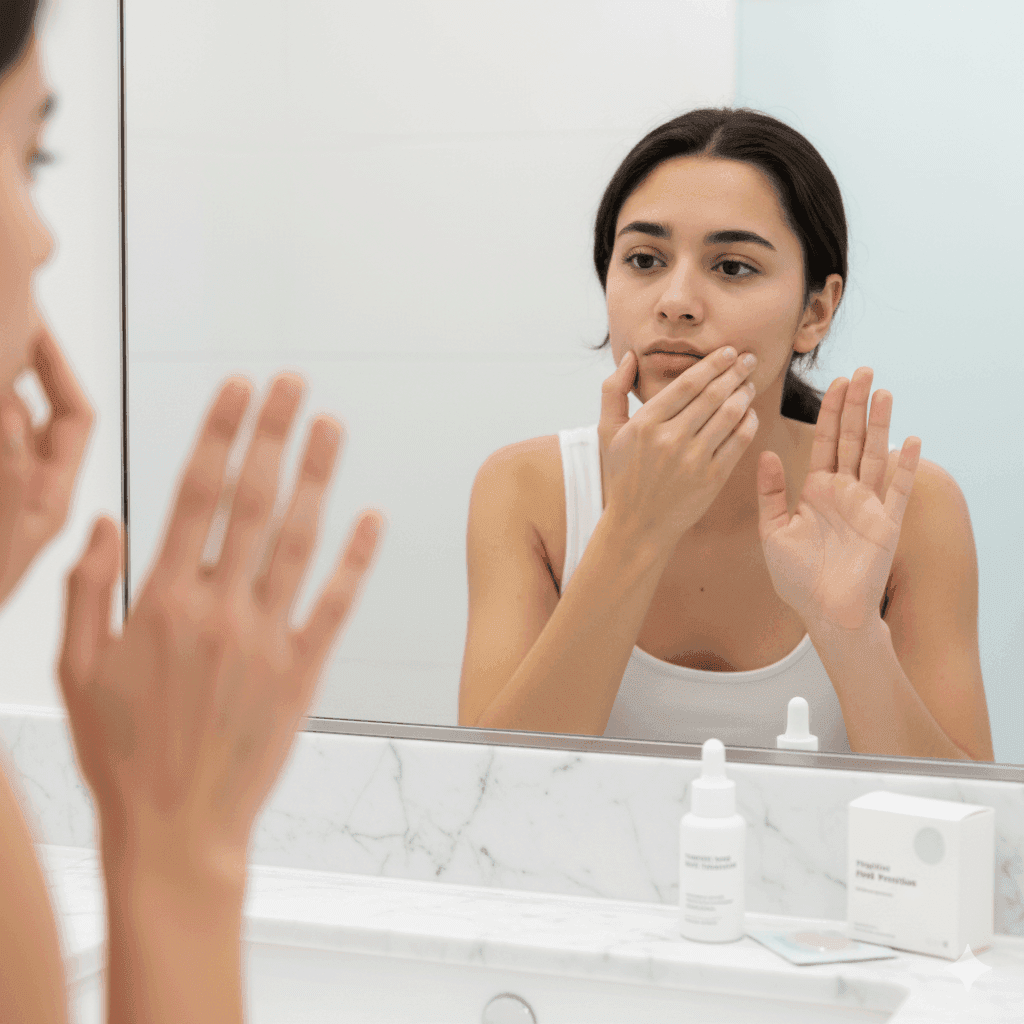
A whitehead can feel impossible to ignore.
It sits just under the skin, looks “ready,” and popping it feels like the fastest solution.
Yet dermatologists consistently advise against popping whiteheads—and for good reason.
What seems like a harmless habit often turns a small, non-inflamed blockage
into long-lasting skin damage.
What exactly is a whitehead?
Whiteheads are closed comedones.
They form when oil (sebum) and dead skin cells clog a pore,
but the pore opening remains closed.
Because the pore is sealed:
- The contents are trapped beneath the skin
- Bacteria are not exposed to air
- Inflammation is usually minimal
This is why whiteheads are typically small, firm, and non-painful.
Why popping whiteheads feels tempting
Whiteheads create visible texture.
They feel like something that “should” come out with pressure.
The problem is that unlike blackheads,
whiteheads are not open to the surface.
Applying pressure doesn’t release them cleanly—it forces their contents deeper.
What really happens when you pop a whitehead
1. The blockage is pushed deeper
When you squeeze a closed pore, the contents often move downward instead of out.
This can:
- Enlarge the clogged pore
- Trigger inflammation
- Turn a whitehead into a painful pimple
2. The skin barrier gets damaged
Fingernails and tools create micro-tears in the skin.
Barrier damage:
- Slows healing
- Increases sensitivity
- Makes pores clog more easily in the future
3. Risk of infection increases
Hands and tools carry bacteria.
Once the skin is broken, bacteria can enter the pore.
This increases the risk of:
- Inflamed acne
- Pus-filled [Pimples](https://clearritual.com/blog/acne/what-are-pimples-causes-types-treatment-guide)
- Longer-lasting breakouts
4. Post-acne marks and scars can form
Even if a whitehead looks small,
repeated picking increases the risk of:
- Dark marks (post-inflammatory hyperpigmentation)
- Persistent redness
- Textural scarring
These marks often last far longer than the original whitehead.
Why dermatologists strongly advise against popping
From a dermatology perspective, whiteheads are non-inflammatory.
Popping them:
- Creates inflammation where there was none
- Delays natural resolution
- Increases long-term skin damage
Dermatologists focus on helping the pore clear itself gradually,
rather than forcing it open.
Is there ever a safe way to extract whiteheads?
At home, the safest answer is no.
In clinical settings, trained professionals may perform extractions using:
- Sterile tools
- Proper skin preparation
- Controlled pressure
This is very different from squeezing at home.
What to do instead of popping whiteheads
1. Be patient with skin turnover
Whiteheads often clear as the skin naturally renews itself.
This usually takes a few weeks.
2. Use gentle exfoliation (sparingly)
Controlled chemical exfoliation can help prevent buildup inside pores
without physical trauma.
3. Support the skin barrier
Well-hydrated, protected skin sheds dead cells more evenly,
reducing future whiteheads.
4. Avoid touching the face unnecessarily
Frequent touching increases both irritation and bacterial transfer.
Why popping makes whiteheads come back more often
Each time the barrier is damaged:
- The skin produces more oil to protect itself
- Cell turnover becomes uneven
- Pores clog more easily
This creates a cycle where whiteheads return repeatedly
in the same areas.
When to see a dermatologist instead
Professional help may be useful if:
- Whiteheads are persistent or widespread
- They frequently turn inflamed
- Texture issues affect confidence
- You’re tempted to pick regularly
A dermatologist can recommend safe, targeted options
that reduce whiteheads without damaging the skin.
Key takeaway
Popping whiteheads feels satisfying in the moment,
but it works against long-term skin health.
Dermatologists say no because popping:
- Creates inflammation
- Damages the skin barrier
- Increases marks and scarring
- Makes whiteheads more likely to return
The safest approach is patience, gentle care,
and letting the skin clear itself naturally.
Editorial Standards
Clear Ritual has Strict sourcing guidelines to ensure our content is accurate and current. We rely on peer-reviewed studies, academic research institutions, and medical associations. We strive to use primary sources and refrain from using tertiary references. See a mistake? Learn More about our Editorial Standards.



