




DIY Treatments for Whiteheads: Safe vs Harmful Remedies
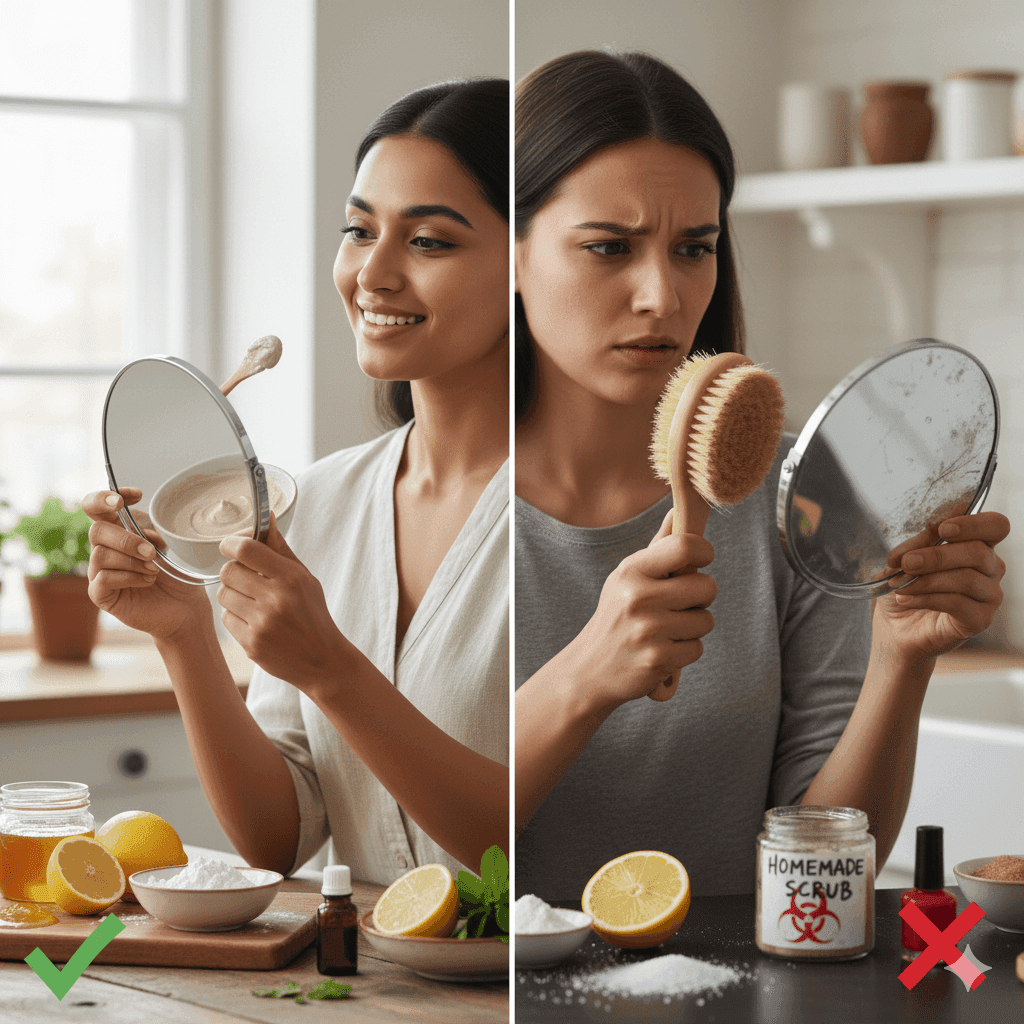
DIY skincare remedies are often tempting when whiteheads show up.
They feel accessible, affordable, and “natural.”
But while some home-based treatments can gently support the skin,
others quietly damage the skin barrier and make whiteheads worse over time.
This guide clearly separates safe DIY practices from
harmful DIY remedies, so you know what actually helps—and what to avoid.
Why DIY treatments need caution for whiteheads
Whiteheads are closed comedones.
Oil and dead skin are trapped under a sealed pore, which means forceful or irritating
remedies cannot “pull them out.”
DIY treatments that irritate, dry, or scratch the skin often:
- Weaken the skin barrier
- Trigger excess oil production
- Increase long-term congestion
The safest DIY approaches focus on calming and supporting the skin,
not attacking the whiteheads directly.
DIY remedies that are generally safer (when used correctly)
1. Gentle steam (occasional use only)
Light steaming may help soften the skin and loosen surface debris.
- Limit to 5–7 minutes
- Keep a safe distance to avoid burns
- Do not squeeze whiteheads afterward
Steam does not remove whiteheads, but it may support cleansing if used sparingly.
2. Pure aloe vera gel
Aloe vera is calming and lightweight.
- Helps soothe irritation
- Supports barrier recovery
- Provides non-greasy hydration
It won’t unclog pores, but calmer skin is less likely to form new whiteheads.
3. Short-contact honey masks
Raw honey can support hydration when used briefly.
- Apply for 10–15 minutes only
- Rinse gently with lukewarm water
- Avoid overnight use
Long contact can feel occlusive on whitehead-prone skin.
4. Clay masks (limited use)
Clay can absorb excess surface oil.
- Use no more than once a week
- Do not let clay fully dry and crack
- Always moisturise after
Overuse can trigger oil rebound and worsen congestion.
DIY remedies that often worsen whiteheads
1. Lemon juice
Lemon juice is highly acidic and photosensitising.
- Disrupts skin pH
- Damages the skin barrier
- Increases risk of irritation and marks
It does not safely treat whiteheads.
2. Baking soda
Baking soda is alkaline and harsh.
- Strips natural oils
- Disrupts the skin’s protective barrier
- Triggers more oil production
This often leads to more whiteheads, not fewer.
3. Sugar, salt, or coffee scrubs
Physical scrubs create micro-tears in the skin.
- Increase inflammation
- Worsen uneven texture
- Aggravate closed pores
These are especially harmful for whitehead-prone skin.
4. Undiluted essential oils
Many essential oils are irritating when applied directly.
- Can cause contact dermatitis
- Increase sensitivity
- Worsen barrier damage
“Natural” does not equal safe for facial skin.
Why DIY remedies alone rarely clear whiteheads
Whiteheads form due to:
- Oil production
- Uneven skin cell turnover
- Barrier health
DIY remedies may support comfort, but they usually cannot:
- Unclog pores deeply
- Prevent recurrence
- Replace consistent skincare routines
How to use DIY treatments responsibly
- Patch test every new remedy
- Use occasionally, not daily
- Avoid combining multiple DIY treatments
- Stop immediately if irritation occurs
When to move beyond DIY care
If whiteheads persist despite gentle routines and cautious DIY support,
structured skincare or professional guidance is often more effective and safer.
Key takeaway
DIY treatments for whiteheads fall into two categories:
those that gently support the skin—and those that quietly damage it.
Avoid harsh, acidic, or abrasive remedies.
Focus on calming, lightweight support and consistent care.
Healthy skin clears whiteheads better than stressed skin.
Editorial Standards
Clear Ritual has Strict sourcing guidelines to ensure our content is accurate and current. We rely on peer-reviewed studies, academic research institutions, and medical associations. We strive to use primary sources and refrain from using tertiary references. See a mistake? Learn More about our Editorial Standards.



