




Whiteheads on Oily vs Dry Skin: Treatment Differences Explained
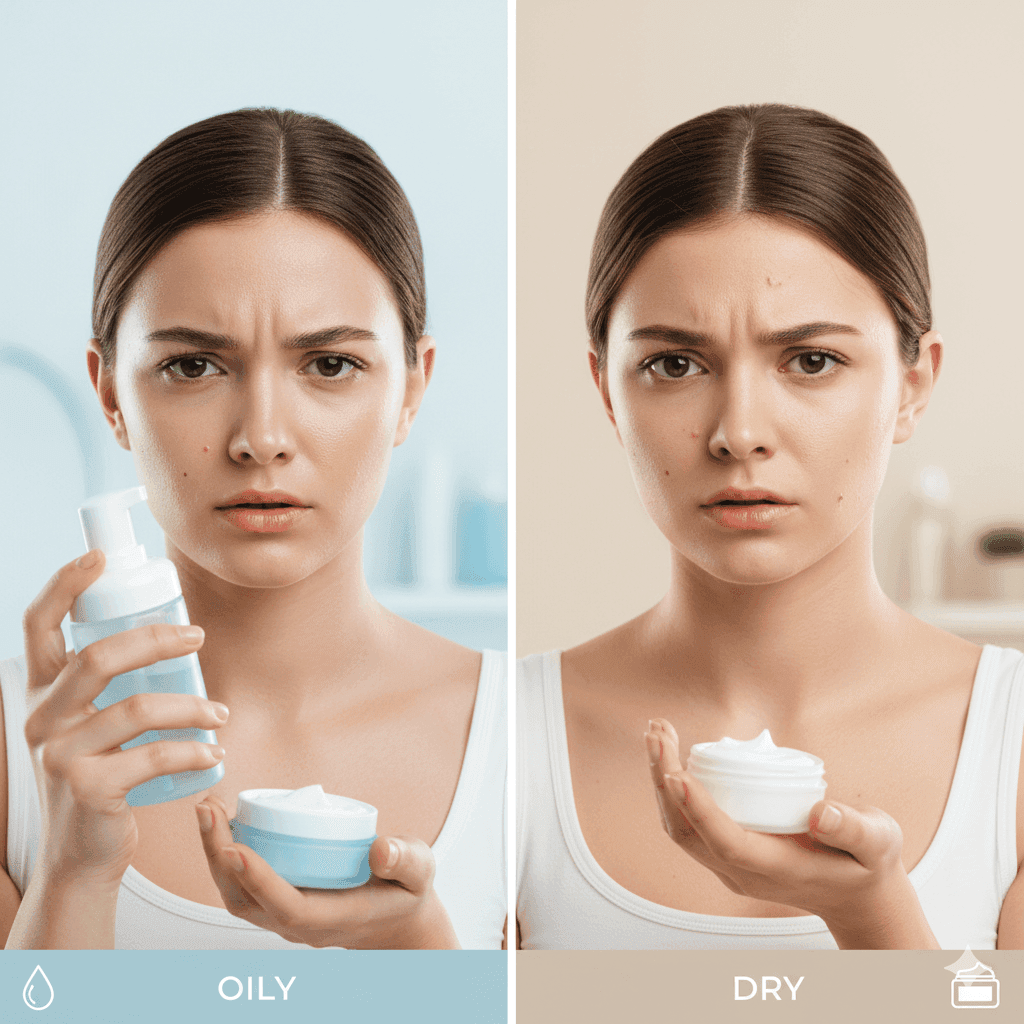
whiteheads are often associated with oily skin—but they can appear just as easily on dry or dehydrated skin.
What confuses many people is that the same treatment that helps one skin type
can worsen whiteheads on another.
Understanding how whiteheads behave differently on oily vs dry skin
is essential for choosing the right treatment and avoiding unnecessary irritation.
Why whiteheads form on both oily and dry skin
Whiteheads are closed comedones.
They form when oil and dead skin cells get trapped inside a pore with a closed opening.
While oil plays a role, whiteheads are not caused by oil alone.
Skin barrier health and cell turnover are just as important.
This is why both oily and dry skin can develop whiteheads—but for different reasons.
How whiteheads behave on oily skin
Oily skin naturally produces more sebum.
When oil mixes with dead skin cells inside pores, congestion forms easily.
Common triggers on oily skin
- Excess sebum production
- Hot, humid climate
- Heavy or greasy products
- Over-cleansing that triggers oil rebound
What whiteheads on oily skin usually look like
- Small, firm bumps
- Clusters on the nose, forehead, and chin
- Shiny skin with persistent texture
Best treatment approach for oily skin
- Gentle cleansing twice daily
- Lightweight, gel-based moisturisers
- Controlled chemical exfoliation (2–3 times weekly)
- Non-greasy, fast-absorbing sunscreen
The goal is to manage oil without stripping the skin.
How whiteheads behave on dry or dehydrated skin
Dry skin can still produce oil—but it often has a weakened skin barrier.
When the barrier is compromised, dead skin cells shed unevenly and clog pores.
Common triggers on dry skin
- Barrier damage from harsh products
- Skipping moisturiser
- Over-exfoliation
- Environmental dryness or frequent air-conditioning
What whiteheads on dry skin usually look like
- Rough or bumpy texture
- Tightness with small clogged bumps
- Whiteheads appearing alongside flakiness
Best treatment approach for dry skin
- Very gentle, non-foaming cleansers
- Barrier-repair moisturisers
- Minimal exfoliation (once weekly or less)
- Strict sun protection
Here, healing the barrier is more important than reducing oil.
Why treating dry skin like oily skin backfires
A common mistake is using strong acne treatments on dry skin whiteheads.
This often leads to:
- Increased dryness and irritation
- Slower skin repair
- More clogged pores over time
When dry skin is stressed, it struggles to shed dead cells normally—worsening whiteheads.
Why treating oily skin like dry skin also fails
Using very rich creams or avoiding exfoliation entirely on oily skin
can trap oil inside pores.
This often results in:
- Persistent congestion
- Greasy texture
- Whiteheads that keep returning
How to tell which skin type your whiteheads belong to
- Oily skin whiteheads: Shine, enlarged pores, frequent congestion
- Dry skin whiteheads: Tightness, flaking, irritation with acne products
Some people have combination skin—oily in some areas, dry in others.
Treatment may need to differ by zone.
Key takeaway
Whiteheads don’t mean the same thing on every skin type.
On oily skin, they’re often driven by excess oil.
On dry skin, they’re more often linked to barrier damage and uneven shedding.
Matching treatment to your skin’s needs—not just the presence of whiteheads—
is what leads to smoother, clearer skin over time.
Editorial Standards
Clear Ritual has Strict sourcing guidelines to ensure our content is accurate and current. We rely on peer-reviewed studies, academic research institutions, and medical associations. We strive to use primary sources and refrain from using tertiary references. See a mistake? Learn More about our Editorial Standards.



