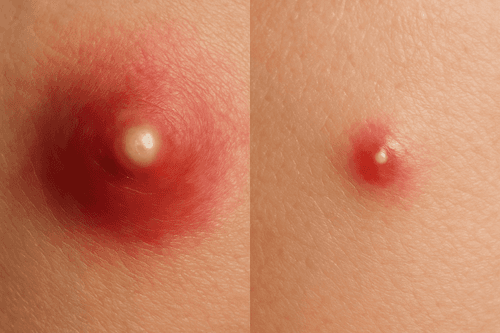
Pimple on Forehead: Causes & Treatment Options
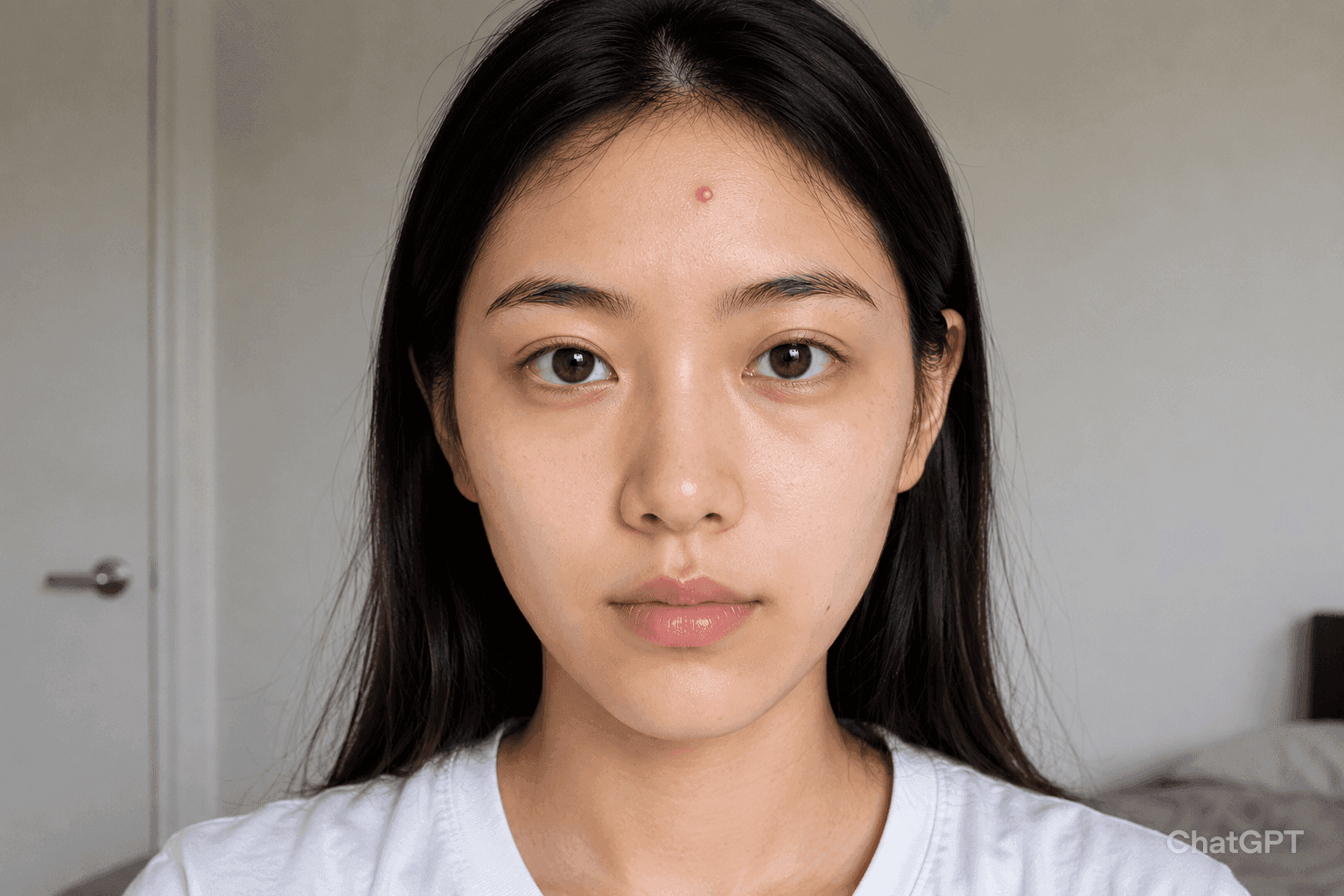
A pimple on your forehead is not a sign of poor hygiene, and it almost certainly is not telling you something mystical about your liver or digestive system. Forehead acne — also called zits, spots, or breakouts on the forehead — happens when a hair follicle gets clogged with excess oil, dead skin cells, and bacteria. It is one of the most common skin concerns because the forehead sits in the T-zone, a strip of skin with a higher concentration of oil-producing glands than almost anywhere else on your face.
Here are the three most direct answers to the questions people actually search:
- What causes a pimple on your forehead? Excess sebum + dead skin cells + Cutibacterium acnes bacteria clogging a follicle, triggered by hormones, hair products, sweat, or friction.
- What does a pimple on your forehead mean? Biologically, it means a follicle is blocked and inflamed. It does not reliably indicate a specific organ problem.
- How long does it last? Surface pimples (whiteheads, blackheads) typically clear in 3–7 days with the right care. Deeper nodules can take 3–6 weeks.
The rest of this guide covers each of those answers in detail — causes, types, treatment options that actually work, and when to see a professional.
Does the Location of a Pimple on Your Forehead Mean Anything?
Face mapping is the idea — popularised by traditional Chinese medicine and Ayurveda — that breakouts in specific zones signal problems in corresponding internal organs. Under this framework, forehead pimples are linked to the digestive system or bladder.
The honest answer: face mapping is not supported by clinical dermatology research. A 2020 review in the Journal of the American Academy of Dermatology found no reproducible anatomical connection between acne zone patterns and specific internal organ dysfunction.[1] The forehead simply has more oil glands and more environmental contact — that is why it breaks out more.
That said, persistent forehead acne that does not respond to standard care can sometimes signal hormonal imbalances (androgens, cortisol) or nutritional deficiencies — but these are systemic causes, not organ-specific signals. More on that in the internal triggers section below.
Forehead Pimples develop when hair follicles become clogged with excess sebum, dead skin cells, and bacteria, triggering inflammation. This area is particularly prone to breakouts due to higher oil gland concentration and frequent contact with hair products, sweat, and environmental irritants.
Key Takeaways:
- Forehead pimples result from clogged pores, excess oil production, and bacterial activity
- Common triggers include hair products, sweat, friction, hormonal fluctuations, and stress
- The forehead's high oil gland density makes it a frequent breakout zone
- Early intervention focusing on gentle care and trigger identification helps prevent worsening
- Persistent or severe forehead acne warrants professional dermatological evaluation
What Happens Beneath Your Forehead Skin
Your forehead sits within the T-zone, an area packed with sebaceous glands that produce sebum to protect and moisturize skin. When these glands overproduce oil due to hormonal signals, stress, or external triggers, the excess sebum mixes with dead skin cells that haven't shed properly. This combination creates a plug inside the hair follicle.
Once the follicle is blocked, the airless environment becomes ideal for Cutibacterium acnes bacteria to multiply. These bacteria feed on sebum and release inflammatory substances that alert your immune system. White blood cells rush to the site, causing redness, swelling, and sometimes pus formation. What started as a microscopic blockage becomes a visible, often painful pimple.
The skin barrier on your forehead also faces constant challenges. Hair touching the area transfers styling products, natural scalp oils, and environmental pollutants directly onto the skin. Sweat during physical activity or warm weather increases moisture and friction, which can push bacteria deeper into partially clogged pores.
Why Your Forehead Is Particularly Vulnerable
The forehead's anatomy makes it a frequent target for breakouts. The concentration of sebaceous glands here exceeds most other facial areas except the nose and chin. These glands respond intensely to androgens, hormones that spike during puberty, menstrual cycles, and times of stress.
Hair products pose a specific risk to forehead skin. Conditioners, leave-in treatments, gels, and hair oils contain ingredients that are comedogenic when transferred to facial skin. If you apply these products and they migrate forward through sweating or touching, they coat pores and trap debris inside. This process, called pomade acne, explains why breakouts often cluster along the hairline.
Friction represents another overlooked factor. Hats, headbands, bicycle helmets, and even repeated touching transfer bacteria while creating pressure that irritates follicles. If you wear these items during exercise, the combination of sweat, heat, and friction intensifies the inflammatory response.
Sleep position matters more than most people realize. Pressing your forehead against a pillowcase accumulates oils, bacteria, and product residue night after night. Even clean pillowcases collect skin cells and sebum within days, creating a breeding ground for the bacteria that worsen acne.
Forehead Acne vs. Other Breakout Zones: Is the Forehead Really Different?
Yes — the forehead behaves differently from the cheeks, chin, and jawline, and the reasons matter for how you treat it.
| Zone | Primary Driver | Oil Gland Density | Most Common Trigger | Best First Response |
|---|---|---|---|---|
| Forehead | Excess sebum + external contact | Very high (T-zone) | Hair products, sweat, hats | BHA (salicylic acid), gentle cleansing |
| Nose | Sebum + enlarged pores | Highest on face | Blackheads, sun damage | BHA, pore-minimising retinoids |
| Chin / Jaw | Hormonal androgens | Moderate | Hormonal cycles, stress | Hormonal evaluation, topical retinoids |
| Cheeks | Environmental + diet | Lower | Pollution, dairy, phone contact | Antioxidants, dietary changes |
| Back / Shoulders | Sweat + friction | High (body) | Workout gear, heat | Salicylic acid body wash, breathable fabrics |
The forehead stands out because it combines high oil gland density (similar to the nose) with high environmental contact (unlike the nose). This is why forehead acne often responds faster to external trigger management — reducing hair product migration, changing pillowcases, and keeping hands away — than chin or jaw acne, which is more deeply hormonal.
If your breakouts are concentrated on the chin and jaw and on the forehead simultaneously, hormonal factors are likely driving both and a dermatologist evaluation is worth prioritising.
Internal Factors That Drive Forehead Breakouts
Hormonal fluctuations directly influence sebum production. Androgens signal sebaceous glands to enlarge and produce more oil. Women often notice forehead pimples appear in the week before menstruation when progesterone levels drop and androgens temporarily dominate. Hormonal changes during pregnancy or when starting or stopping oral contraceptives can similarly trigger breakouts.
Stress elevates cortisol, a hormone that increases inflammation throughout your body, including skin. Cortisol also stimulates oil glands and weakens the skin barrier, making it easier for irritants to penetrate. During high-stress periods, many people unconsciously touch their face more frequently, transferring bacteria from hands to forehead.
Dietary patterns influence skin through multiple pathways. High glycemic foods cause rapid blood sugar spikes that trigger insulin release. Insulin stimulates androgens, which ramp up sebum production. Foods with a high glycemic index include white bread, sugary drinks, and processed snacks. Some individuals also react to dairy, which contains hormones and bioactive molecules that may affect their own hormonal balance and inflammatory responses.
Sleep deprivation disrupts your skin's repair processes. During deep sleep, your body increases blood flow to skin, repairs DNA damage, and rebuilds collagen. Without adequate sleep, inflammatory markers increase, weakening your skin's ability to fight bacteria and heal existing pimples. Exhaustion also often triggers stress eating and poor dietary choices, creating a cycle that affects skin health.
Research & Evidence: What the Science Actually Says About Forehead Pimples
Forehead acne is one of the most studied forms of facial acne. Here is what the current evidence consistently shows.
Diet and glycemic load do affect acne. A 2007 randomised controlled trial in the American Journal of Clinical Nutrition found that participants on a low-glycemic-load diet for 12 weeks had significantly fewer acne lesions than those on a high-glycemic diet, with reductions driven by lower androgen activity and reduced sebum production.[5] The forehead, with its high sebaceous gland density, is one of the zones most sensitive to this effect.
Stress-driven cortisol directly increases sebum output. A 2017 study in Clinical, Cosmetic and Investigational Dermatology confirmed that psychological stress elevates cortisol, which in turn stimulates sebaceous gland activity and weakens the skin barrier.[6] The study noted that acne severity scores correlated significantly with self-reported stress levels — independent of hormonal fluctuations from the menstrual cycle.
Salicylic acid is clinically effective at low concentrations. A 2013 study in the Journal of Clinical and Aesthetic Dermatology demonstrated that 2% salicylic acid reduced inflammatory and non-inflammatory acne lesion counts by 25% and 29% respectively over a 4-week period, with minimal adverse effects.[3]
Face mapping lacks clinical validation. A 2020 literature review in the Journal of the American Academy of Dermatology examined face mapping theories and found no reproducible anatomical or physiological basis for the claim that forehead acne specifically indicates digestive system dysfunction.[1] The review concluded that acne distribution is primarily explained by sebaceous gland density and environmental contact patterns.
Pomade acne is a documented clinical entity. Hair cosmetics-induced acne — also known as pomade acne — was first described by Plewig and Kligman in 1970 and has been replicated in subsequent studies. Comedogenic ingredients in hair products, including certain mineral oils, petrolatum derivatives, and silicone variants, are documented causes of hairline and forehead breakouts.
These findings collectively support a treatment approach centred on: (a) reducing dietary glycemic load, (b) managing stress, (c) using salicylic acid as a first-line topical, and (d) auditing hair products for comedogenic ingredients.
External Triggers You Can Control
Over-cleansing damages the lipid barrier that protects your skin. When you strip away natural oils with harsh cleansers or wash too frequently, your skin compensates by producing even more sebum. This rebound effect worsens oiliness and clogs pores faster. Stick to cleansing twice daily with a gentle, pH-balanced formula that doesn't leave your skin feeling tight or squeaky.
Exfoliation requires careful balance. Removing dead skin cells prevents them from clogging pores, but aggressive scrubbing or using exfoliants too often inflames skin and disrupts the barrier. Physical scrubs with rough particles can create micro-tears that invite bacterial infection. Chemical exfoliants like salicylic acid work more effectively by dissolving the bonds between dead cells without mechanical friction.
Makeup and sunscreen choices matter significantly. Heavy, oil-based products trap sebum and bacteria against your skin. Look for non-comedogenic formulas labeled for acne-prone skin. Even products marketed as oil-free can contain ingredients like certain silicones or waxes that contribute to clogging.
Environmental factors assault forehead skin constantly. Urban pollution deposits microscopic particles that generate free radicals and trigger inflammation. These particles mix with sebum to create a sticky film that clogs pores. Humid weather increases sweating, while dry environments cause the skin to overproduce oil to compensate for moisture loss.
Different Types of Forehead Pimples
| Pimple Type | Appearance | What's Happening | Pain Level |
|---|---|---|---|
| Whitehead | Small white or flesh-colored bump | Closed comedone with trapped sebum and cells | Minimal |
| Blackhead | Dark spot at pore opening | Open comedone where trapped material oxidizes | None |
| Papule | Red, raised bump without white center | Inflammation without pus formation | Moderate |
| Pustule | Red bump with white or yellow center | Pus-filled lesion with active infection | Moderate to high |
| Nodule | Large, hard bump deep under skin | Severe inflammation in deeper skin layers | Severe |
| Cyst | Large, soft, pus-filled lump | Deep infection with significant tissue damage | Severe |
Understanding which type of pimple you're dealing with helps determine the appropriate response. Surface-level whiteheads and blackheads often respond to consistent gentle care and topical treatments. Deeper nodules and cysts involve inflammation beyond the reach of surface treatments and may require professional intervention to prevent scarring.
Early Management Strategies
Start with the fundamentals before adding treatments. Wash your face twice daily with lukewarm water and a gentle cleanser. Hot water strips protective oils, while cold water doesn't effectively remove sebum. Pat your skin dry rather than rubbing, which can spread bacteria and irritate inflamed areas.
Keep hair away from your forehead, especially if you use styling products. Tie hair back during sleep and physical activity. If you have bangs, consider pinning them back when at home to reduce constant contact with forehead skin.
Change pillowcases every two to three days. If that's not practical, flip your pillow to a fresh side each night. Cotton pillowcases absorb less oil than synthetic materials and allow better air circulation.
Salicylic acid helps dissolve the mixture of oil and dead cells that clog pores. This beta-hydroxy acid penetrates oil to reach inside the follicle, unlike alpha-hydroxy acids that work primarily on the surface. Start with a low concentration product used once daily to assess your skin's tolerance.
Benzoyl peroxide kills the bacteria that contribute to inflammation. It works by releasing oxygen into the follicle, creating an environment where Cutibacterium acnes cannot survive. Start with a 2.5% concentration, as higher percentages don't work significantly better and cause more irritation.
Never pick or squeeze forehead pimples. Your fingers transfer additional bacteria while forcing infected material deeper and sideways into surrounding tissue. This practice significantly increases the risk of scarring and can transform a simple pimple into a larger, more painful lesion.
How to Get Rid of Forehead Acne: A Step-by-Step Treatment Guide
Most forehead acne clears with a consistent 4-step routine applied for at least 6–8 weeks. Skin cells turn over roughly every 28 days, which means results take time — but the steps are straightforward.[2]
Step 1: Cleanse twice daily with a pH-balanced, non-stripping formula (morning and night)
Use lukewarm water — not hot. Hot water disrupts the lipid barrier, causing your skin to overproduce oil as compensation. Look for a cleanser with a pH between 4.5 and 5.5, which matches your skin's natural acidity. Pat dry; never rub. Why this matters: over-washing is one of the most common triggers of rebound oiliness on the forehead.
Step 2: Apply a salicylic acid toner or serum to the forehead (evenings, 3–4 times per week to start)
Salicylic acid (BHA, beta-hydroxy acid) is oil-soluble, meaning it penetrates inside the follicle rather than working only on the surface. Concentrations of 0.5–2% are effective for forehead acne. A 2013 study in the Journal of Clinical and Aesthetic Dermatology found that 2% salicylic acid reduced comedone count by 25% over 4 weeks.[3] Start 3 nights a week and increase only if your skin tolerates it without dryness.
Step 3: Spot-treat active pimples with 2.5% benzoyl peroxide (targeted use only)
Benzoyl peroxide kills Cutibacterium acnes by releasing oxygen into the follicle — an environment the bacteria cannot survive in. Studies consistently show 2.5% performs as well as 5% or 10% with significantly less irritation.[4] Apply only to visible spots, not the entire forehead, to avoid unnecessary dryness.
Step 4: Moisturise every morning (even if your skin feels oily)
This step is the one most people skip — and skipping it is counterproductive. Oily forehead skin is often dehydrated beneath the surface, meaning the skin overproduces oil to compensate for moisture loss. A lightweight, non-comedogenic moisturiser with ceramides and niacinamide supports barrier repair without clogging pores.
What Ingredients Actually Work for Forehead Acne?
| Ingredient | How It Works | Best For | Start With |
|---|---|---|---|
| Salicylic acid (BHA) | Dissolves oil and dead cells inside the follicle | Blackheads, whiteheads, oily foreheads | 1% serum, every other night |
| Benzoyl peroxide | Kills C. acnes bacteria via oxygen release | Red papules, pustules | 2.5% spot treatment |
| Niacinamide | Reduces sebum production and calms redness | All forehead acne types | 5–10% daily moisturiser |
| Retinoids (Rx) | Speeds cell turnover, prevents pore clogging | Persistent or severe acne | Prescription only, start low |
| Azelaic acid | Anti-inflammatory, reduces hyperpigmentation | Post-acne marks, sensitive skin | 10–15% serum |
Common Mistakes That Delay Healing
- Mixing too many actives at once. Salicylic acid + benzoyl peroxide + retinoid on the same night will damage your barrier faster than it heals pimples. Introduce one new ingredient at a time, two weeks apart.
- Stopping too soon. Most people abandon a routine after 2 weeks. Skin cell turnover takes 28 days; fair assessment requires 6–8 weeks of consistency.[2]
- Applying sunscreen only on sunny days. UV exposure worsens post-acne hyperpigmentation. Daily SPF 30+ non-comedogenic sunscreen is non-negotiable even in winter.
The Skin Barrier Connection
Your skin barrier consists of cells held together by lipids, forming a protective wall that keeps moisture in and irritants out. When this barrier becomes compromised through harsh products, over-washing, or environmental stress, it loses its ability to regulate oil production and fight bacteria effectively.
A damaged barrier also allows transepidermal water loss, where moisture evaporates from deeper skin layers. Your skin responds to this dehydration by producing more sebum, creating an oily surface over dehydrated tissue. This combination is particularly problematic because treatments that target oiliness can worsen the underlying dehydration.
Supporting barrier function requires gentle care and adequate hydration. Even oily, acne-prone skin needs moisturizer. Choose lightweight, non-comedogenic formulas with ingredients like ceramides, hyaluronic acid, and niacinamide that support barrier repair without adding heavy oils.
When to Seek Professional Help
| Situation | Why Professional Care Matters |
|---|---|
| Painful nodules or cysts | Risk of scarring and need for prescription treatment |
| Widespread breakouts | May require systemic medication or hormone evaluation |
| No improvement after 8–12 weeks | Underlying triggers may need professional identification |
| Post-inflammatory hyperpigmentation | Early treatment prevents permanent discoloration |
| Sudden adult-onset acne | Could indicate hormonal imbalance requiring assessment |
Dermatologists can offer treatments unavailable over the counter. Prescription retinoids increase cell turnover and prevent pore clogging more effectively than cosmetic alternatives. Topical antibiotics reduce bacterial populations, while oral medications address hormonal factors or systemic inflammation. For severe cases, isotretinoin targets multiple acne causes simultaneously.
Professional extractions remove stubborn comedones safely, reducing the risk of scarring that comes with at-home picking. Chemical peels and light therapies can address both active breakouts and residual marks from previous pimples.
Lifestyle Modifications That Support Clear Skin
| Factor | How It Affects Forehead Skin | Practical Changes |
|---|---|---|
| Hydration | Maintains skin moisture balance and supports barrier function | Drink water consistently throughout day |
| Diet | Influences inflammation and hormone levels | Emphasize whole foods, reduce high-glycemic items |
| Stress | Increases cortisol and triggers oil production | Practice regular stress management techniques |
| Sleep | Enables skin repair and reduces inflammation | Aim for 7–9 hours nightly on clean pillowcases |
| Exercise | Improves circulation but increases sweat | Shower promptly after workouts, keep hair tied back |
These lifestyle factors work together rather than in isolation. Improving one area often creates positive effects in others. Better sleep reduces stress, which improves dietary choices, creating an upward spiral that benefits your skin.
Common Mistakes That Worsen Forehead Acne
Using too many products simultaneously overwhelms your skin and makes it impossible to identify what helps or hurts. Your skin barrier can only handle a certain amount of active ingredients before becoming irritated. Introduce one new product at a time, waiting at least two weeks before adding another.
Spot-treating pimples while ignoring the rest of your forehead addresses symptoms but not prevention. Acne develops over weeks before becoming visible. Treating only existing pimples misses the microcomedones forming beneath the surface that will become tomorrow's breakouts.
Assuming oily skin doesn't need moisturizer leads to a damaged barrier and increased oil production. Skipping moisturizer after using acne treatments leaves skin vulnerable and often triggers rebound oiliness.
Expecting overnight results causes frustration and product-hopping. Skin cells turn over approximately every 28 days, meaning most treatments require consistent use for 6–8 weeks before you can fairly assess their effectiveness.
Frequently Asked Questions
Why do I only get pimples on my forehead and not other facial areas?
Your forehead has a higher concentration of sebaceous glands compared to your cheeks or jawline, making it more prone to oil-related breakouts. Additionally, this area receives more contact with hair, hair products, sweat, and hands, introducing irritants and bacteria that trigger pimple formation.
Can stress really cause forehead pimples?
Yes, stress directly impacts skin through cortisol elevation, which stimulates sebaceous glands to produce more oil and increases inflammatory responses throughout the body. Stress also disrupts sleep and often triggers unconscious face-touching, both of which worsen breakouts.
How long does it take for a forehead pimple to heal?
Surface pimples like whiteheads typically resolve within 3–7 days with proper care. Deeper papules and pustules may take 1–2 weeks. Nodules and cysts can persist for weeks or months without professional treatment and carry a higher risk of leaving marks.
Should I stop using all hair products if I have forehead acne?
You don't necessarily need to eliminate all products, but choose non-comedogenic formulas and keep them away from your hairline. Apply products mid-length to ends rather than at roots, and thoroughly cleanse your forehead after application to remove any transferred residue.
Is it normal for forehead pimples to get worse before improving?
Some acne treatments cause temporary purging as they accelerate cell turnover and bring underlying clogs to the surface faster. This typically occurs in the first 2–4 weeks and should improve afterward. If worsening continues beyond this period, the product may not suit your skin.
Do forehead pimples indicate an internal health problem?
Occasional forehead pimples are normal and usually relate to external factors. However, sudden onset of severe acne in adulthood, or breakouts that don't respond to standard treatments, may warrant evaluation for hormonal imbalances, nutritional deficiencies, or other underlying conditions.
Can I exercise with forehead pimples or will sweat make them worse?
Exercise benefits overall skin health through improved circulation and stress reduction. However, sweat combined with friction from headbands or hats can worsen breakouts. Keep hair tied back, wear breathable fabrics, and cleanse your forehead immediately after exercise.
Why do I get forehead pimples at the same time every month?
Cyclical breakouts typically relate to hormonal fluctuations during your menstrual cycle. Progesterone drops and androgens temporarily increase before menstruation, stimulating oil production. These hormonal shifts make pores more prone to clogging during this window.
What to Expect: A Realistic Timeline for Clearing Forehead Acne
One of the most frustrating parts of treating forehead acne is not knowing whether your routine is working. Here is what evidence-based dermatology says you should realistically expect at each stage.[2][4]
Weeks 1–2: Stabilisation (and possible purging)
You may notice slightly more breakouts in the first two weeks if you are using a retinoid or chemical exfoliant for the first time. This is called purging — the product accelerates cell turnover, bringing existing microcomedones to the surface faster. It is normal. If you are not using actives, you should at minimum see redness reduce and no new large pimples forming.
Weeks 3–4: First visible improvement
Surface-level whiteheads and blackheads typically begin clearing within 3–4 weeks of consistent salicylic acid use. Redness from existing papules starts fading. This is when most people mistakenly stop the routine, thinking it has done its job — the underlying microcomedones are still forming.
Months 2–3: Meaningful reduction
With a consistent 4-step routine, most people see a 40–60% reduction in active forehead breakouts by the end of month two.[4] Skin texture begins to improve. Post-acne dark spots may still be visible — these take longer than active pimples to fade.
Months 4–6: Clear skin maintenance
At this stage, the goal shifts from treatment to prevention. Most people can reduce active-ingredient frequency (e.g. salicylic acid twice a week instead of nightly) and focus on barrier maintenance. If you have not seen meaningful improvement by month three, a dermatologist evaluation is warranted — an underlying cause (hormonal, nutritional, or microbiome-related) may be driving persistence.
Citable one-liner: Forehead acne typically shows meaningful improvement within 6–8 weeks of a consistent salicylic acid and barrier-repair routine.
What This Means for You
Most forehead acne clears meaningfully within 6–8 weeks when the right routine targets both the clogged follicle (salicylic acid) and the skin barrier (non-comedogenic moisturiser). Avoiding the two biggest mistake cycles — over-washing and product-hopping — gets most people most of the way there.
Here is what to do next, in order of impact:
- Audit your hair products today. Check for mineral oil, isopropyl myristate, and heavy silicones in anything that touches your hairline. Swap one product at a time.
- Start a twice-daily gentle cleanse + every-other-night salicylic acid routine. Give it a full 8 weeks before judging results.
- Change your pillowcase every 2–3 days and pin hair back during sleep — two of the highest-impact low-effort changes for forehead-specific acne.
- If you experience cyclical breakouts (tied to your menstrual cycle, or appearing in response to stress spikes), flag this pattern for a dermatologist — it signals a hormonal component that topicals alone won't fully resolve.
- Track your diet for 4 weeks. Note breakout patterns relative to high-glycemic meals and dairy. The data you collect is more useful than any generic elimination advice.
If your forehead keeps breaking out despite consistent care, the issue is almost always an unidentified personal trigger — not a character flaw in your routine. That is when a structured skin assessment that maps your specific root causes — hormonal, dietary, and environmental — makes the difference between managing symptoms repeatedly and actually resolving them.
Editorial Standards
Clear Ritual has Strict sourcing guidelines to ensure our content is accurate and current. We rely on peer-reviewed studies, academic research institutions, and medical associations. We strive to use primary sources and refrain from using tertiary references. See a mistake? Learn More about our Editorial Standards.
Related Articles
Best Face Wash for Pimples: What to Look For
Published May 26, 2026
Best Ingredients to Treat Pimples (Salicylic Acid, Benzoyl Peroxide, etc.)
Published June 7, 2026
Can Air Conditioner Cause Pimples? How AC Affects Your Skin
Published May 26, 2026
Boils vs Pimples: How to Know When It’s Something More Serious
Published June 6, 2026