Papules Acne: Causes, Symptoms, Treatment & Prevention
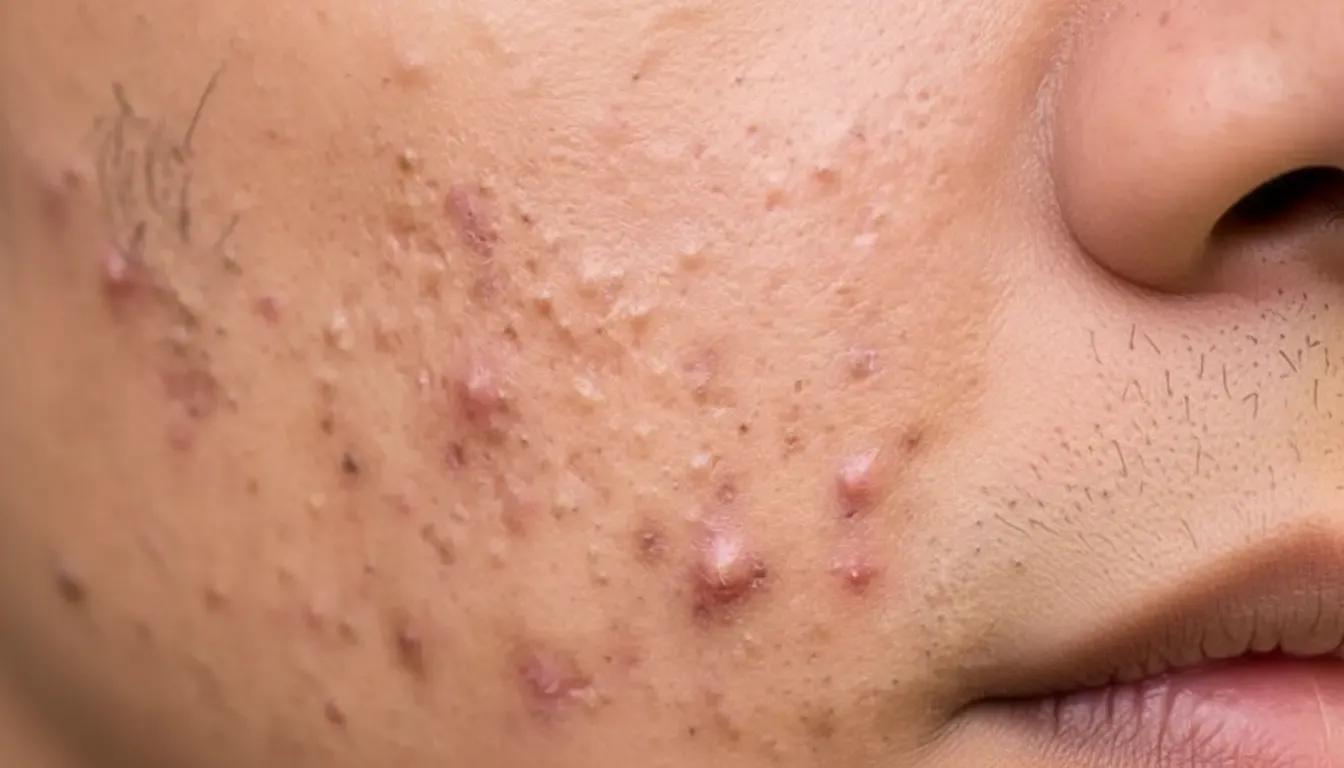
Acne is one of the most prevalent skin conditions that many people face over their lifetime. It can appear in many different forms. Among all the types of acne, papule acne is the most annoying form because they are painful to touch and difficult to hide. Understanding what papules are, their causes, and their treatment will help you deal with the breakouts and achieve smoother skin.
This guide will provide you with all the information about papule acne.
What are Papules?
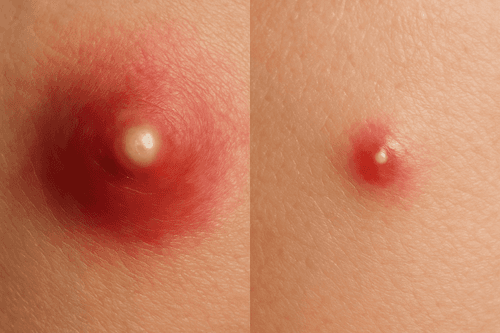
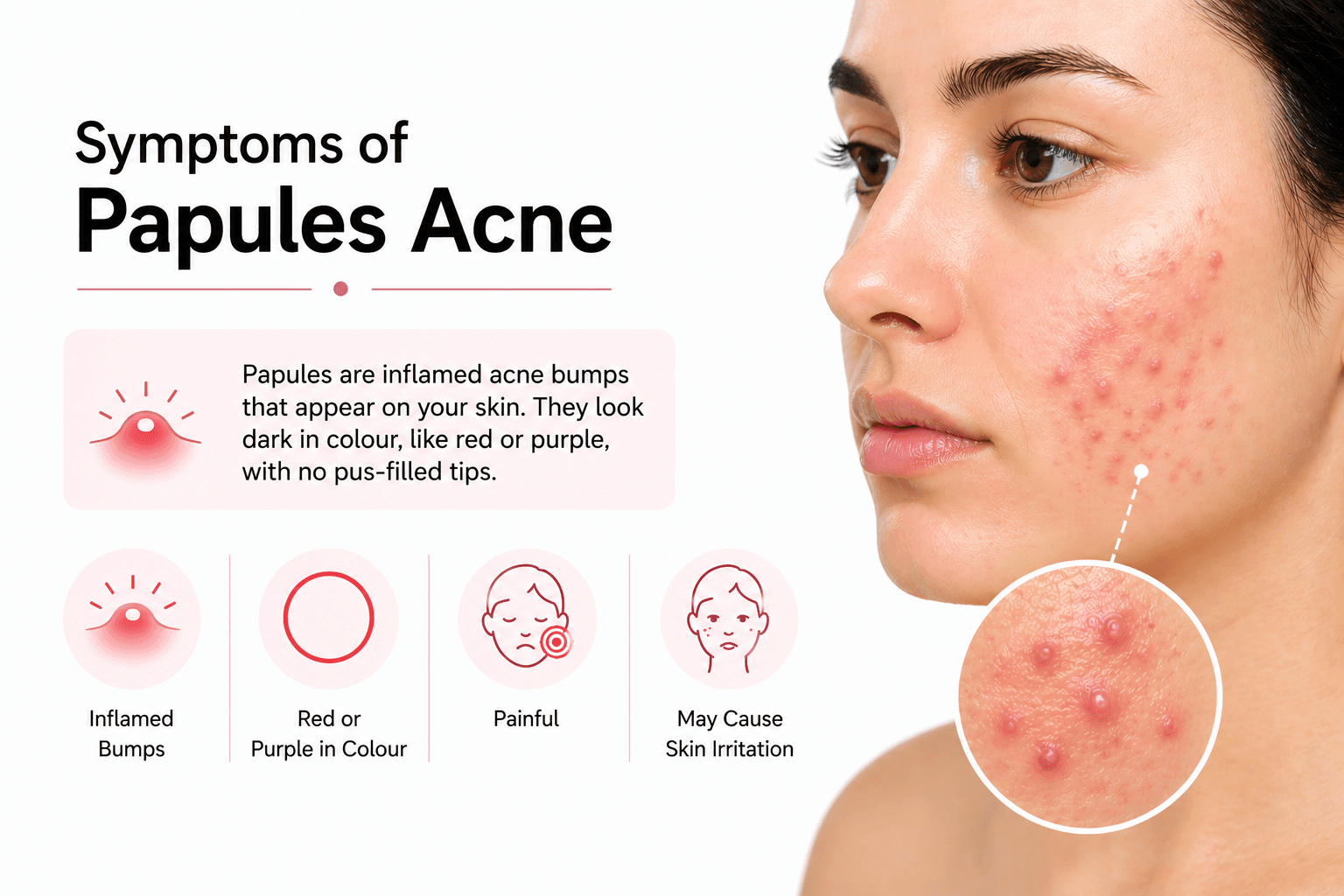
Papules on the face are small, raised, red bumps that are painful to the touch. They do not contain fluid or pus and are normally quite firm due to the inflammation underneath. Papules’ inflammatory nature may also lead to hyperpigmentation (dark spots) or scarring if left untreated.
Papules rarely appear alone. They are almost always present with other acne types, such as blackheads, whiteheads, pustules, or cysts, indicating more widespread skin inflammation.
Papules vs Other Types of Acne
Understanding the distinctions between papules and other acne types helps in identifying and addressing the specific acne concern.
| Type | Appearance | Cause | Pain and inflammation | Risk of scarring |
|---|---|---|---|---|
| Whiteheads (Closed Comedones) | Small, flesh-colored or whitish bumps | Follicles getting completely blocked beneath the skin’s surface. | Non-inflammatory, painless | Low |
| Blackheads (Open Comedones) | Small, dark spots | Follicles getting partially blocked; the trapped sebum and dead skin cells, when exposed to air, get oxidized and turn black. | Non-inflammatory, painless | Low |
| Pustules | Raised, red bumps with a white/yellow pus-filled center | Worsening of inflammation inside a papule, leading to the accumulation of white blood cells and cell debris. | Inflammatory, painful | Moderate (if irritated or untreated) |
| Nodules | Large, solid lumps located deep beneath the skin's surface | Severe inflammation and infection deep within the follicle, leading to significant tissue damage | Strongly inflammatory, painful and persistent | High |
| Cysts | Large, soft, fluid-filled or pus-filled lumps that are even deeper and more severe than nodules | Severe infection/inflammation leading to extensive tissue destruction | Highly inflammatory, very painful | Very high |
Where Do Papules Commonly Occur?
Papules Acne can appear on various parts of the body, but certain areas are more prone to their development due to a higher concentration of sebaceous glands.
-
They develop most frequently on the face, especially the cheeks, forehead, and chin. The "T-zone" (forehead, nose, and chin) is particularly susceptible due to the higher oil production here.
-
Shoulders, back, chest, and neck, where there are a lot of sebaceous glands.
-
Rarely appear on arms, legs, and scalp as a result of folliculitis (inflammation of hair follicles), responses to specific products, or friction in that area.
Symptoms of Papules
The primary symptoms associated with papules acne are directly related to their inflammatory nature.
-
Redness around the bump and localized swelling
-
Tenderness or pain when touched due to the inflammation and pressure on nerve endings.
What Causes Papules?
There are several causative factors for the development of papules acne. These include:
Internal Causes
-
Excess sebum production and bacterial buildup: The sebaceous glands produce an oily substance called sebum, which lubricates the skin and hair. When sebum is produced in excess, it can mix with dead skin cells and clog hair follicles. When pores get blocked and oxygen levels drop, the bacteria called Cutibacterium acnes, which live in hair shafts, grow quickly. The lipases (lipid-digesting enzymes) released by these bacteria cause inflammation, leading to the formation of papules.
-
Elevated levels of androgen (Male hormone): Androgen level generally rises during the hormonal changes happening with menarche, PCOS, and menstruation in females and puberty in males. This is a primary driver of increased sebum production, a cause of acne, including papules.
External Triggers
-
Use of comedogenic skincare items: Products that clog pores are termed "comedogenic." Using heavy or oily lotions, sunscreens, foundations, or other cosmetics can directly contribute to the formation of papules by exacerbating follicular blockage.
-
High humidity: Humid environments and excessive sweating can create a warm, moist breeding ground for bacteria on the skin. Sweat can also mix with sebum and dead skin cells, increasing the likelihood of clogged pores.
-
Friction or pressure from helmets, hats, or tight clothing: This phenomenon is known as "acne mechanica." Constant rubbing or pressure on the skin from sports equipment (helmets, shoulder pads), tight headbands, or restrictive clothing can irritate hair follicles, leading to inflammation and the development of papules.
-
Poor hygiene or over-washing: While seemingly contradictory, both extremes can trigger papules acne. When you don't clean your face properly, oil, dead skin cells, and bacteria can build up. On the other hand, washing your face too much or wiping it too hard can remove the natural oils, which can irritate the skin and cause more sebum production to protect the skin. This can even damage the skin barrier, making it more likely to get inflamed.
Are Papules Contagious?
Papules are not transmissible. You cannot "catch" papules from another person, nor can you spread them from one part of your body to another through casual contact.
Who Can Get Papules?
Papules acne can affect both males and females, though certain factors increase susceptibility in specific groups.
Teens and Young Adults
Papules are common in teens and young adults, mostly because of the drastic hormonal changes that happen during puberty. Androgen levels rise during this time, leading to the formation of papules.
Adults
High androgen levels in women due to Polycystic Ovary Syndrome (PCOS), pregnancy, and menopause can cause different types of acne, including papules. Many women get papule acne flare-ups in the days before their period because of the hormonal variations during that time. Stress can also affect the balance of hormones, which could make acne worse.
Skin Type Factors
Anyone can get papules, but people with oily or mixed skin tend to get them more often. Their skin naturally makes more sebum, resulting in clogged pores and the excessive growth of Cutibacterium acnes. This leads to acne.
People with dry or sensitive skin can also get papules, but not as often. This is usually because of responses to certain products or inflammation underneath the skin.
Do Papules Go Away on Their Own?
The time it takes for papules acne to go away depends on how bad they are and the person's skin type. Mild ones may disappear on their own in a few days. The body's immune system can often clear these without intervention, though proper skincare can certainly expedite the process.
More persistent papules, especially those that are larger, deeper, or part of a widespread breakout, require proper skincare or medical treatment. If you don't do anything, these could last for weeks, turn into pustules or worse lesions, and more likely cause scarring or post-inflammatory hyperpigmentation. Regular treatment assists the healing process by lowering inflammation, clearing pores, and stopping new lesions from forming.
When to Seek Medical Help?
While many individuals attempt to manage papule acne with natural remedies and over-the-counter products, medical care becomes necessary in the following situations:
-
Papules are painful, persistent, or spreading: Your papules are causing significant discomfort, do not seem to heal, or if new lesions are continuously appearing and spreading to other areas of your face or body.
-
Over-the-counter products aren’t helping: You have consistently used OTC acne treatments for several weeks (typically 4-6 weeks), and there is no noticeable improvement.
-
Risk of scarring or hyperpigmentation: Your papules are leaving behind dark spots (post-inflammatory hyperpigmentation), or you are concerned about the potential for permanent scarring.
-
Impact on quality of life: Your acne, including papules, is causing significant emotional distress, anxiety, or affecting your self-esteem.
Questions to Ask Your Dermatologist
Preparing a list of questions before your appointment with a dermatologist can help you get the most out of your consultation.
-
What type of acne do I have? A dermatologist can accurately classify your acne (e.g., mild, moderate, severe, inflammatory, non-inflammatory) and identify if you primarily have papules, pustules, or other lesions.
-
What’s triggering these papules? Discuss potential internal and external factors that might be contributing to your papules acne, such as hormonal changes, stress, diet, or product use.
-
Are my skincare products causing breakouts? Bring a list of your current skincare and makeup products. Your dermatologist can review them and advise on whether any ingredients might be comedogenic or irritating.
-
Do I need hormonal testing? If your dermatologist suspects a hormonal reason for your acne, especially if you are female and experience irregular periods, excessive hair growth, or other symptoms of hormonal imbalance, blood tests may be recommended.
How are Papules Diagnosed?
Papules can be easily identified by their appearance and by touch during self-examination. However, in many circumstances, a professional medical evaluation is necessary for papule acne treatment. A dermatologist can correctly identify the kind and severity of your acne, find possible triggers, and suggest a treatment plan that is right for you.
Dermatologists primarily diagnose papules through visual examination. They assess the size, shape, color, and texture of the lesion. If needed, the doctor may perform a dermoscopy, an examination using a magnifying lens, to check the papules more closely and differentiate them from similar skin conditions. In certain cases, a skin biopsy, where a small tissue sample is taken and examined under a microscope, may be required to confirm the diagnosis and rule out other possible diseases. This combination of clinical inspection ensures accurate identification and appropriate management of papules.
Treatment Options for Papules
The common treatments for papule acne are listed below. Results depend on the type of skin, the person's medical history, and how well the individual follows the treatment plan.
Topical OTC Treatments
For mild to moderate papules, several over-the-counter topical treatments target acne formation:
-
Benzoyl Peroxide: An antimicrobial that lowers Cutibacterium acnes population and lightly exfoliates the skin. It comes in different strengths, and it can make skin dry, so start with the lower concentration.
-
Salicylic acid: A beta-hydroxy acid (BHA) that penetrates pores to unclog them and exfoliate the skin. It also has anti-inflammatory properties and is effective for both inflammatory and non-inflammatory lesions.
-
Retinoids (e.g., Adapalene): Vitamin A derivatives that normalize skin cell turnover, preventing clogged pores and reducing inflammation. Initial use may cause temporary dryness or sensitivity.
-
Niacinamide: Vitamin B3, an anti-inflammatory ingredient that soothes irritated skin, reduces redness, strengthens the skin barrier, and regulates sebum.
Prescription Medications
When OTC treatments are insufficient, a dermatologist may prescribe more potent medications:
-
Topical antibiotics (e.g., Clindamycin or Erythromycin): Reduce Cutibacterium acnes and inflammation. They are often combined with benzoyl peroxide to prevent resistance.
-
Oral antibiotics (e.g., Doxycycline, Minocycline): For moderate-to-severe or widespread papules, these reduce systemic bacterial growth and inflammation. Prescribed for limited durations to minimize antibiotic resistance.
-
Hormonal treatments: These regulate hormone levels to decrease sebum production and are particularly effective for hormone-linked acne. For women, doctors may often prescribe certain birth control pills or spironolactone.
-
Isotretinoin (Formerly Accutane): A potent oral retinoid reserved for severe, treatment-resistant acne. It significantly reduces sebaceous gland activity and inflammation. Requires strict medical supervision due to potential side effects.
Professional Procedures
Dermatologists may also perform some in-office procedures to complement medical treatments:
-
Chemical peels (Salicylic or Glycolic acid): Exfoliate the skin, unclog pores, lower inflammation, and make the skin feel better. If you have acne-prone skin, salicylic acid can help.
-
Light or laser therapy: In light therapy, blue light targets bacteria, while red light reduces inflammation. Lasers can address redness and improve skin texture or scarring. Multiple sessions are often required to get optimal results.
-
Manual extraction (By dermatologists only): This is performed on non-inflammatory comedones that often accompany papules. Never attempt self-extraction to avoid worsening inflammation, infection, or scarring.
Should You Pop or Squeeze Papules?
You should avoid squeezing papules. As these don't have pus in them, there is no fluid to get out. Trying to pop or squeeze papules acne can:
-
Worsen inflammation: It can push the inflamed material deeper into the skin, intensifying the redness, swelling, and pain.
-
Introduce new bacteria: Your fingers carry bacteria, which can be introduced into the already compromised follicle, leading to secondary infection or turning a papule into a pustule or even a nodule.
-
Lead to scarring: Aggressive manipulation can damage the surrounding skin tissue, significantly increasing the risk of permanent acne scars (atrophic or hypertrophic scars).
-
Post-inflammatory hyperpigmentation (PIH): Trauma to the skin can stimulate melanin production, resulting in dark spots that can linger for months or even years after the papule has healed.
How to Care for Skin with Papules?
Taking care of papules acne-prone skin requires a careful skincare routine and healthy behaviors.
Skincare Routine Tips
To take care of and avoid papules, you need to stick to a gentle skincare routine:
-
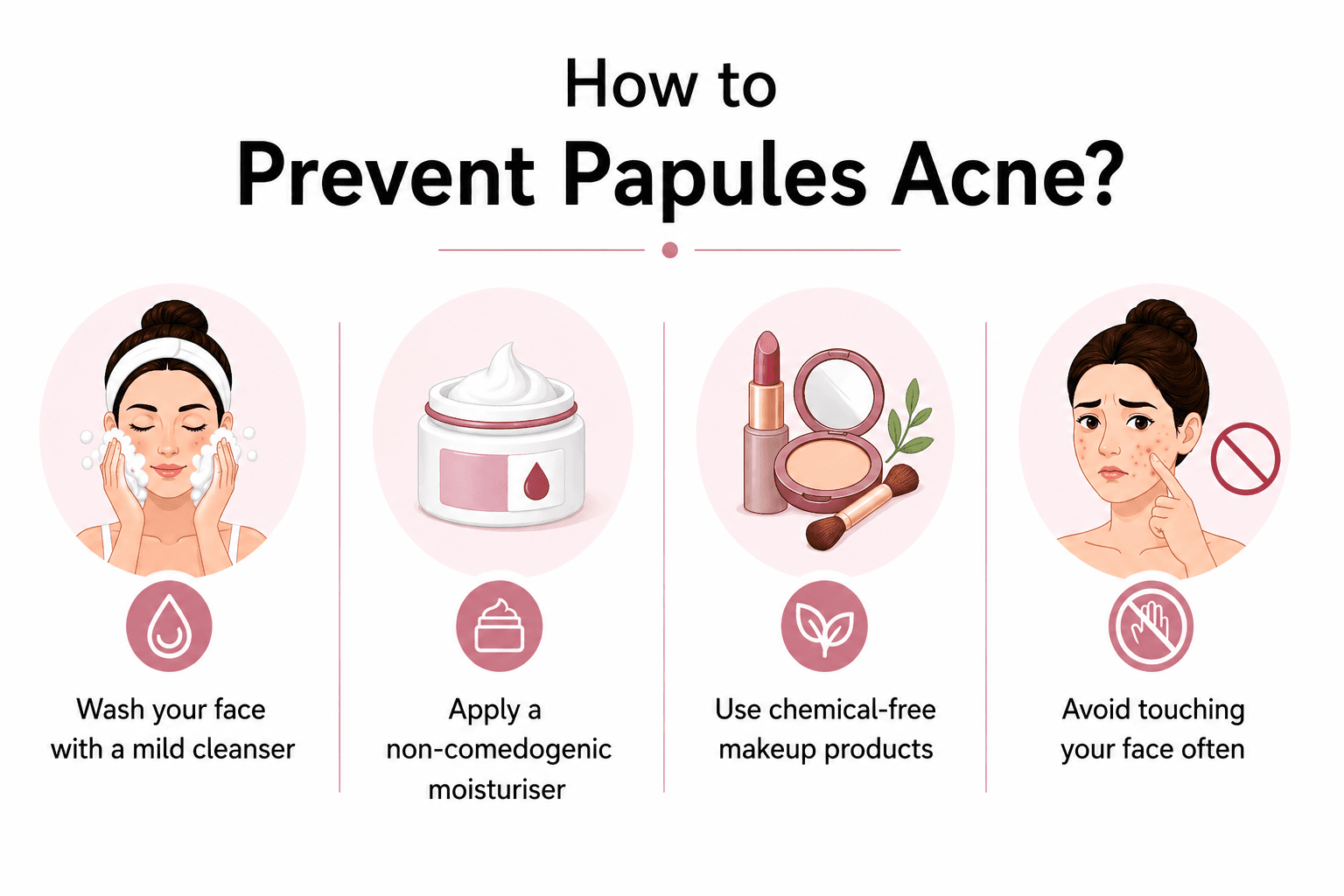
Use a soft, non-comedogenic cleanser: Clean your face twice a day with a moderate, pH-balanced cleanser. Choose products labeled "non-comedogenic" to avoid clogging pores. Avoid harsh soaps that strip the skin of its natural oil.
-
Avoid harsh scrubbing or exfoliating: Aggressive scrubbing can irritate inflamed papules. If exfoliating, opt for gentle chemical exfoliants like salicylic acid and introduce them slowly.
-
Apply lightweight, oil-free moisturizers: Hydrate your skin with a non-comedogenic, oil-free moisturizer to prevent dehydration.
-
Don’t skip sunscreen, use SPF 30+: Many acne treatments increase sun sensitivity. Use a broad-spectrum, non-comedogenic sunscreen daily to protect skin and prevent worsening post-inflammatory hyperpigmentation.
-
Switch to non-comedogenic makeup products: Review all your cosmetic products. Make sure they say "non-comedogenic," "oil-free," or "non-acnegenic." These formulas are less likely to block pores and cause papules to develop. Think about using mineral-based cosmetics instead.
Lifestyle Changes
Certain changes to your lifestyle can control the frequency and severity of papule acne. These include:
-
Manage stress: Stress might cause hormonal changes, leading to more sebum production and inflammation. Use stress-relieving methods like yoga, meditation, or getting enough sleep.
-
Consider dietary triggers (individualized): The link between nutrition and acne is different for everyone; however, some people find that eating foods with a high glycemic index or dairy products makes their outbreaks worse. Talk to a doctor about your triggers and focus on eating a balanced diet.
FAQs About Papules
1. How long do papules last?
Mild surface papules may disappear in a week if treated properly. Larger, deeper, or more inflamed papules might linger for weeks or months if untreated. Consistent treatment can shorten and prevent their progression.
2. Can stress cause papules?
Stress can cause papules to form and worsen accidentally. Worry doesn't cause acne, but it can raise cortisol, which tells sebaceous glands to produce more oil. Extra oil can block pores and promote inflammation, causing papules or worsening the condition.
3. Are papules a sign of hormonal imbalance?
Papules can indicate a hormonal imbalance, especially elevated androgen levels, in adult women. Consult your dermatologist or endocrinologist if you have recurrent papules, especially around the jawline, chin, or neck, or if your acne is accompanied by irregular periods or excessive hair growth.
4. Can shaving cause papules?
Yes, shaving can create papules, especially in those already suffering from other types of acne and folliculitis. Hair follicles might become irritated and inflamed after shaving. It can also spread bacteria, causing red, puffy papules. Using a clean, sharp razor, shaving in the direction of hair development, and then using a moderate, non-comedogenic shaving lotion can reduce the chances of papule formation.
5. What’s the best spot treatment for papules?
Benzoyl peroxide or salicylic acid spot treatments are advised for inflammatory papules. The former kills acne-causing germs and reduces inflammation, while the latter exfoliates and unclogs pores. After cleaning, apply a tiny quantity on the papule per product instructions. Niacinamide-based spot treatments can reduce redness and soothe sensitive skin without drying it out. Always patch-test new products.
6. Do cold compresses help with papules?
Cold compresses can temporarily relieve inflammatory papules. A clean, cold compress (such as an ice pack wrapped in a thin cloth) on the sore site for 5–10 minutes many times a day will numb the area and limit blood supply, reducing redness, swelling, and pain. This may relieve symptoms, not the cause of papules.
Final Thoughts
Most people get papule acne sometime during their lifetime. It is a very common condition that can be treated with proper self-care. Sometimes medical treatment may be required if the papules are stubborn, spread to other parts, painful, inflamed, or do not respond to home care methods. Keep in mind that it normally takes time and work to acquire clear skin.
If you are struggling with any type of acne and want to figure out what therapy is appropriate for your skin, get a free dermatologist consultation online on Clear Rituals. Our experts provide personalized, clinically guided solutions blending dermatology, Ayurveda, and advanced science to support healing and long-term skin health.
Start your journey to clear, healthy skin with Clear Rituals! Take your skin test, get expert insights, and order your dermatologist-recommended personalized skin care kit!
Sources-
Editorial Standards
Hims & Hers has Strict sourcing guidelines to ensure our content is accurate and current. We rely on peer-reviewed studies, academic research institutions, and medical associations. We strive to use primary sources and refrain from using tertiary references. See a mistake? Learn More about our Editorial Standards.