
Guidance

Guidance from Skin Coaches

FreeConsulation

1:1 Guidance

ScienceBacked

Science Backed Formulation

Combination

Combination of Ayurveda, Dermatology, and Advanced Science

RootCause

We Fix the Internal Trigger

Clear Ritual
Shop

Atrophic vs Hypertrophic Acne Scars
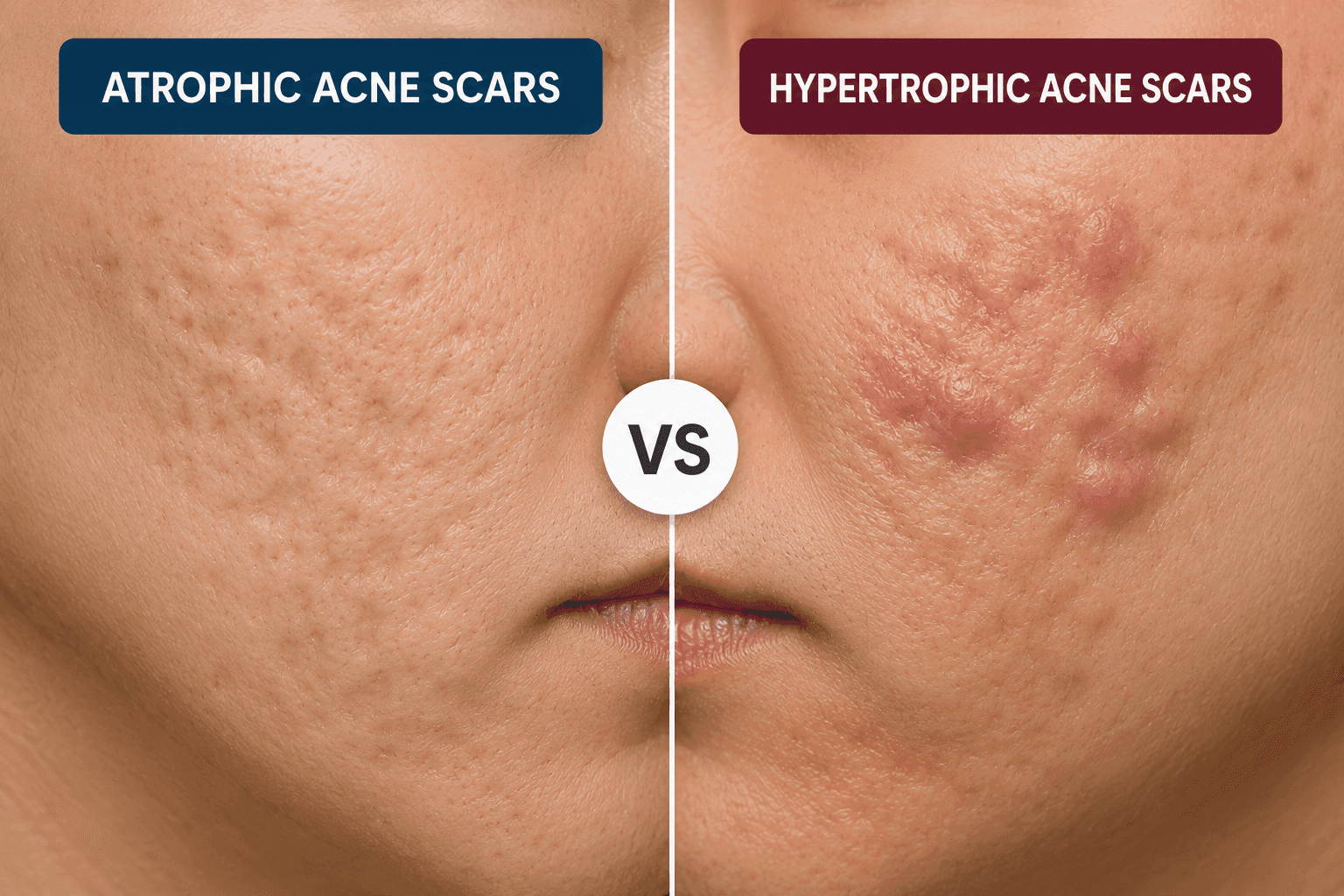
Comparison of atrophic and hypertrophic acne scars

Atrophic acne scars form when the skin loses collagen during healing, creating depressions or indentations. Hypertrophic scars occur when the body produces excess collagen, resulting in raised, thickened tissue. Both types stem from inflammatory acne that damages the dermal layer, but they represent opposite healing responses.

Key Takeaways:

  • Atrophic scars appear as pits or depressions below the skin surface due to collagen loss
  • Hypertrophic scars are raised, thick formations caused by excess collagen production
  • Inflammatory acne severity and individual healing responses determine scar type
  • Early intervention during active acne reduces permanent scarring risk
  • Professional treatments differ significantly between atrophic and hypertrophic scars

What Makes Acne Scars Form

When a pimple develops deep within the skin, inflammation breaks down surrounding tissue. The body responds by producing collagen fibers to repair the damage. However, this repair process doesn't always restore the skin's original structure.

During severe inflammatory acne, enzymes called matrix metalloproteinases break down collagen and elastin in the dermis. This creates a wound that extends beyond the hair follicle. As the inflammation subsides, fibroblasts migrate to the site and begin laying down new collagen.

The quality and quantity of this new collagen determines whether a scar becomes atrophic or hypertrophic. The depth of the initial inflammation, genetic factors, and skin color all influence the healing outcome. Picking or squeezing acne lesions increases tissue damage and makes scarring more likely because it spreads bacteria deeper and widens the inflammatory zone.

Understanding Atrophic Scars

Atrophic scars account for approximately 80–90% of all acne scars. These depressions form when the skin produces too little collagen during the healing phase. The result is a visible crater or indentation that sits below the surrounding skin surface.

Types of Atrophic Scars

Three distinct patterns emerge within atrophic scarring, each with different characteristics and treatment responses.

Icepick scars appear as narrow, deep pits that extend into the dermis. They look like small puncture marks, typically less than 2mm wide. These scars form from severe inflammatory papules or cysts where infection has destroyed tissue and created a column-like defect. The narrow opening makes them particularly challenging to treat with surface-level procedures.

Rolling scars create a wave-like appearance across the skin surface. These broad depressions develop when fibrous bands form between the dermis and subcutaneous tissue, pulling the skin downward. The edges blend gradually into surrounding skin rather than having sharp borders. Rolling scars often result from long-term inflammatory acne that affects larger skin areas.

Boxcar scars have well-defined edges and a flat base, resembling chickenpox scars. They're wider than icepick scars, typically measuring 1.5–4mm across, and extend into the dermis at varying depths. Inflammatory acne that destroys collagen in a localized area creates these angular depressions.

Why Collagen Loss Occurs

Multiple factors disrupt normal collagen production during acne healing. Prolonged inflammation depletes the fibroblasts responsible for making new collagen. When acne lesions remain inflamed for weeks, these cells become exhausted and cannot generate sufficient structural proteins.

Cortisol, the stress hormone, directly inhibits collagen synthesis. Sleep deprivation and chronic stress keep cortisol levels elevated, which slows wound healing and reduces collagen quality. This explains why people experiencing high stress often develop worse scarring from similar acne severity.

Smoking restricts blood flow to healing tissue, reducing oxygen and nutrient delivery to fibroblasts. Nicotine also increases matrix metalloproteinase activity, which breaks down existing collagen faster than the body can replace it. The combination creates an environment where atrophic scars form more readily.

Understanding Hypertrophic Scars

Hypertrophic scars rise above the skin surface but remain within the boundaries of the original acne lesion. Unlike keloids, which extend beyond the initial wound site, hypertrophic scars stay confined to the damaged area. These scars develop when fibroblasts produce excessive collagen during the healing phase.

The elevated tissue appears thick and firm, often with a smooth surface. Hypertrophic scars from acne most commonly form on the chest, back, shoulders, and jawline. These areas experience more mechanical tension on the skin, which triggers increased collagen production during healing.

The Excess Collagen Response

Certain individuals have a genetic tendency toward aggressive scar formation. Their fibroblasts respond to inflammation by producing collagen fibers faster and in greater quantities than needed for simple wound closure. This overactive healing creates dense, disorganized collagen bundles that stack within the dermis.

Transforming growth factor-beta plays a central role in this process. When acne triggers inflammation, this signaling molecule activates fibroblasts and tells them to produce collagen. In people prone to hypertrophic scarring, the TGF-beta signaling doesn't shut off properly, causing continued collagen accumulation even after the wound has closed.

Melanin content influences hypertrophic scar development. People with darker skin tones have higher rates of hypertrophic scarring because their fibroblasts produce more collagen in response to injury. This represents an evolutionary adaptation that provided stronger wound healing but becomes problematic with acne scarring.

Repeated trauma to the same area compounds the problem. When acne develops in the same spot multiple times, each inflammatory episode adds more collagen to existing scar tissue. The back and chest, where friction from clothing constantly irritates healing lesions, show higher rates of hypertrophic scarring.

Key Differences Between Scar Types

FeatureAtrophic ScarsHypertrophic Scars
AppearanceDepressed, below skin surfaceRaised, above skin surface
CollagenInsufficient productionExcess production
Common locationsFace, temples, cheeksChest, back, shoulders, jawline
TextureIndented, varied depthsThick, firm, smooth
Frequency80–90% of acne scars10–20% of acne scars

What Determines Your Scar Type

Several interconnected factors influence whether acne creates atrophic or hypertrophic scars. Understanding these elements helps explain why two people with similar acne develop different scarring patterns.

Genetic factors establish baseline healing tendencies. Family history of keloids or hypertrophic scars indicates higher risk for raised scarring. Conversely, family members with atrophic acne scars suggest a predisposition toward collagen deficiency during healing.

Acne depth and severity directly correlate with scarring risk. Cystic Acne that extends deep into the dermis causes more tissue destruction than surface pustules. The deeper the inflammation reaches, the more structural damage occurs and the higher the chance of permanent scarring.

Age affects collagen production capacity. Younger skin generates collagen more readily, which can increase hypertrophic scar risk in teenagers. However, this same robust healing capacity may prevent atrophic scars by maintaining sufficient collagen production. As skin ages, collagen synthesis slows, making atrophic scarring more likely in adults.

Skin location matters because mechanical tension varies across body areas. The chest and back experience constant stretching from movement and breathing. This tension stimulates fibroblasts to produce more collagen, increasing hypertrophic scar formation in these regions. Facial skin has less mechanical stress, making atrophic scars more common there.

How Inflammation Affects Scarring

The intensity and duration of inflammation determine scarring outcomes. Mild inflammatory acne rarely creates permanent scars because the damage remains superficial. Moderate to severe inflammatory acne penetrates the dermis, triggering the complex healing responses that lead to visible scarring.

Inflammatory mediators like interleukins and tumor necrosis factor-alpha flood the area around an acne lesion. These molecules recruit immune cells to fight bacteria, but they also activate enzymes that break down collagen and elastin. The longer inflammation persists, the more tissue destruction occurs.

Post-inflammatory hyperpigmentation often accompanies both scar types but represents a different process. The inflammation stimulates melanocytes to produce excess pigment, creating dark marks that can last months. This discoloration sits in the epidermis rather than the dermis where scars form, which is why it eventually fades while scars remain permanent.

Touching, picking, or squeezing acne introduces additional trauma. This mechanical pressure ruptures the follicle wall, forcing bacteria and inflammatory material deeper into surrounding tissue. The expanded zone of inflammation increases the likelihood of scarring and often determines its severity.

Sun exposure during active acne worsens inflammation and scarring risk. UV radiation generates free radicals that damage healing tissue and stimulate inflammatory pathways. The combination of acne inflammation and UV damage overwhelms the skin's repair mechanisms, making proper scarring less likely.

Prevention Strategies

Preventing scars requires addressing active acne before permanent damage occurs. Early intervention reduces inflammation duration and minimizes tissue destruction.

Gentle cleansing removes excess oil and dead skin cells without triggering additional inflammation. Over-washing strips the skin barrier, which increases transepidermal water loss and stimulates more oil production. This creates a cycle of irritation that prolongs acne and increases scarring risk. Cleansing twice daily with lukewarm water maintains balance without causing damage.

Avoiding picking or squeezing lesions prevents mechanical trauma that spreads infection deeper. The temporary satisfaction of extracting a pimple causes lasting damage by rupturing the follicle wall and expanding the inflammatory zone. Hands carry bacteria that introduce new infections when touching the face frequently.

Sun protection preserves healing tissue and prevents inflammation from worsening. Physical sunscreens containing zinc oxide or titanium dioxide sit on the skin surface without clogging pores. Chemical sunscreens can irritate active acne, making mineral formulas preferable during breakouts.

Managing stress through adequate sleep, regular movement, and relaxation techniques helps regulate cortisol levels. When cortisol remains chronically elevated, it suppresses immune function and slows wound healing. Seven to nine hours of sleep allows the body to complete repair processes and maintain balanced hormone levels.

Blood sugar control influences inflammatory responses throughout the body. High glycemic foods spike insulin, which increases androgen hormones that stimulate oil production. The combination creates an environment where acne bacteria thrive and inflammation intensifies. Choosing complex carbohydrates, proteins, and healthy fats stabilizes blood sugar and reduces inflammatory triggers.

When to Seek Professional Help

Consulting a dermatologist during active acne prevents scars from forming. Waiting until after scarring develops limits treatment options and makes complete resolution more difficult.

Persistent acne lasting more than six weeks indicates that home care isn't sufficient to control inflammation. The longer acne remains active, the higher the scarring risk becomes. Professional assessment can identify underlying causes and provide targeted treatments that reduce inflammation faster.

Deep, painful cysts or nodules require immediate attention because they penetrate far into the dermis. These severe lesions cause significant tissue destruction and almost always create permanent scars without intervention. Early treatment with appropriate therapies can resolve the inflammation before extensive damage occurs.

Multiple family members with acne scarring suggest genetic factors that increase individual risk. This family history warrants more aggressive acne treatment to prevent similar outcomes. A dermatologist can recommend preventive strategies based on genetic tendencies.

Treatment Approaches Differ by Scar Type

Professional treatments target the specific structural problems each scar type creates. Atrophic scars require techniques that stimulate collagen production or physically raise depressed tissue. Hypertrophic scars need methods that break down excess collagen or flatten raised tissue.

For atrophic scars, procedures work by creating controlled injury that triggers new collagen formation. Microneedling punctures the skin with tiny needles, activating wound healing responses that build collagen in depressed areas. Chemical peels remove surface layers and stimulate deeper regeneration. Laser resurfacing vaporizes damaged tissue while heating underlying dermis to promote collagen remodeling.

Subcision specifically addresses rolling scars by breaking the fibrous bands that tether skin downward. A needle inserted beneath the scar severs these connections, allowing the depressed area to rise. The controlled trauma also stimulates collagen production that further elevates the scar.

Dermal fillers provide immediate volume to atrophic scars by injecting hyaluronic acid or other substances beneath depressions. This lifts the scar to match surrounding skin level. Results last several months before the body gradually absorbs the filler material.

Hypertrophic scar treatments work through opposite mechanisms. Intralesional corticosteroid injections reduce inflammation and break down excess collagen. The medication injected directly into raised scars flattens them over multiple treatment sessions.

Pressure therapy applies constant compression to hypertrophic scars, which reduces blood flow and limits collagen production. Silicone sheets or pressure garments worn consistently for months gradually flatten raised tissue.

Laser treatments for hypertrophic scars use different wavelengths than atrophic scar lasers. Vascular lasers target blood vessels feeding the scar, reducing blood supply and limiting collagen deposition. Ablative lasers remove raised tissue layer by layer.

Understanding Internal Triggers: Clear Ritual's Perspective

Most acne scarring prevention focuses on external treatments, but skin healing depends heavily on internal factors. Hormone imbalances, inflammatory pathways, stress responses, nutrient deficiencies, and genetic factors all influence how skin repairs itself after acne damage.

Topical products and procedures address scars after they form, but they cannot modify the underlying healing patterns that created them. Someone prone to hypertrophic scarring will continue making excess collagen without addressing the internal signals driving that response. Similarly, atrophic scar development reflects systemic factors affecting collagen synthesis throughout the body.

Clear Ritual approaches skin concerns by examining these internal patterns. We combine insights from Ayurveda, modern dermatology, and advanced skin science to identify individual triggers through a structured skin assessment. This evaluation considers hormonal patterns, inflammatory tendencies, stress markers, and metabolic factors that influence skin healing.

Understanding these connections helps explain why similar acne creates different scarring patterns in different people. The goal is recognizing individual trigger combinations rather than applying generic solutions. When internal factors align to support healthy healing responses, the skin's natural repair mechanisms work more effectively, reducing long-term scarring risk.

Living with Acne Scars

Scars represent permanent changes to skin structure, but their appearance often improves over time. Understanding realistic expectations helps reduce frustration and guides appropriate treatment decisions.

New scars continue changing for 12–18 months after formation. Early scars appear red or purple due to increased blood vessel formation in healing tissue. This discoloration gradually fades as blood vessels mature and regress. The scar's final color and texture become apparent only after this remodeling period completes.

Atrophic scars may become less noticeable as surrounding skin ages and loses volume. The depth difference between scarred and normal skin decreases slightly as overall skin thickness reduces with age. However, the structural defect remains permanent without intervention.

Hypertrophic scars sometimes flatten partially on their own over several years. The excess collagen slowly remodels into a more organized structure that sits closer to the skin surface. Complete resolution without treatment rarely occurs, but the raised appearance typically becomes less pronounced.

Makeup and skincare can improve scar appearance temporarily. Color-correcting concealers neutralize redness in hypertrophic scars, while filling primers smooth the texture of atrophic depressions. These cosmetic solutions don't change the underlying scar structure but make it less visible.

Accepting scars as part of individual skin history reduces emotional burden. Many people find that focusing on overall skin health rather than pursuing perfect smoothness creates more satisfaction. Scars tell a story of healing, even if that healing didn't restore original structure.

Frequently Asked Questions

Can atrophic scars turn into hypertrophic scars?

No, these represent fundamentally different healing responses. An atrophic scar forms when the body produces insufficient collagen during healing, creating a depression. A hypertrophic scar develops when the body makes excess collagen, creating raised tissue. Once the scar has formed, it cannot transform into the opposite type because the initial healing response has completed.

Do hypertrophic acne scars go away on their own?

Hypertrophic scars may flatten slightly over several years as collagen remodels, but they rarely disappear completely without treatment. The excess collagen that creates the raised appearance remains in the dermis permanently. Early hypertrophic scars respond better to treatment than older, established scars, making timely intervention important.

Which type of acne scar is harder to treat?

Atrophic scars generally require more treatments to achieve significant improvement because they involve missing tissue that must be rebuilt or replaced. Icepick scars prove particularly challenging due to their depth and narrow shape. Hypertrophic scars often respond well to steroid injections and pressure therapy, though multiple sessions are typically needed.

Can vitamin C help prevent acne scars?

Vitamin C supports collagen synthesis and reduces inflammation, which may help skin heal more effectively after acne. However, it cannot prevent scars from severe inflammatory acne that penetrates deep into the dermis. Vitamin C works best as part of overall skin health rather than as a specific anti-scarring treatment.

Why do I only get acne scars on my cheeks?

Facial skin varies in thickness and oil gland density across different areas. Cheeks have thinner skin with less underlying fat support, making atrophic scarring more visible there. The temples and cheeks also experience more inflammatory acne due to higher sebaceous gland concentration, increasing scarring risk in these zones.

Are hypertrophic scars more common in certain skin tones?

Yes, people with darker skin tones have higher rates of hypertrophic scarring due to increased fibroblast activity and collagen production in response to injury. This represents an adaptive healing response, but it creates more raised scarring from acne. Lighter skin tones show higher rates of atrophic scarring.

How long after acne clears can scars still form?

Scars form during the healing process while acne lesions resolve, not after the skin has completely healed. However, post-inflammatory changes continue evolving for 12–18 months after active acne clears. What initially appears as temporary redness or discoloration may reveal permanent atrophic or hypertrophic changes as this remodeling period progresses.

Can retinoids prevent acne scars?

Retinoids reduce acne severity by normalizing skin cell turnover and decreasing inflammation, which indirectly lowers scarring risk. They also stimulate collagen production that may help fill shallow atrophic scars over time. However, retinoids cannot prevent scars from deep cystic acne or modify genetic tendencies toward hypertrophic scarring.

Editorial Standards

Hims & Hers has Strict sourcing guidelines to ensure our content is accurate and current. We rely on peer-reviewed studies, academic research institutions, and medical associations. We strive to use primary sources and refrain from using tertiary references. See a mistake? Learn More about our Editorial Standards.

Clear Ritual

Targeted Acne Care, Visible Results.

Customised Care. Clinical Results.

Coming Soon.

Clear Ritual App.

For iOS and Android

© 2026 Clear Ritual. All rights reserved.
