




Boils vs Pimples: How to Know When It’s Something More Serious
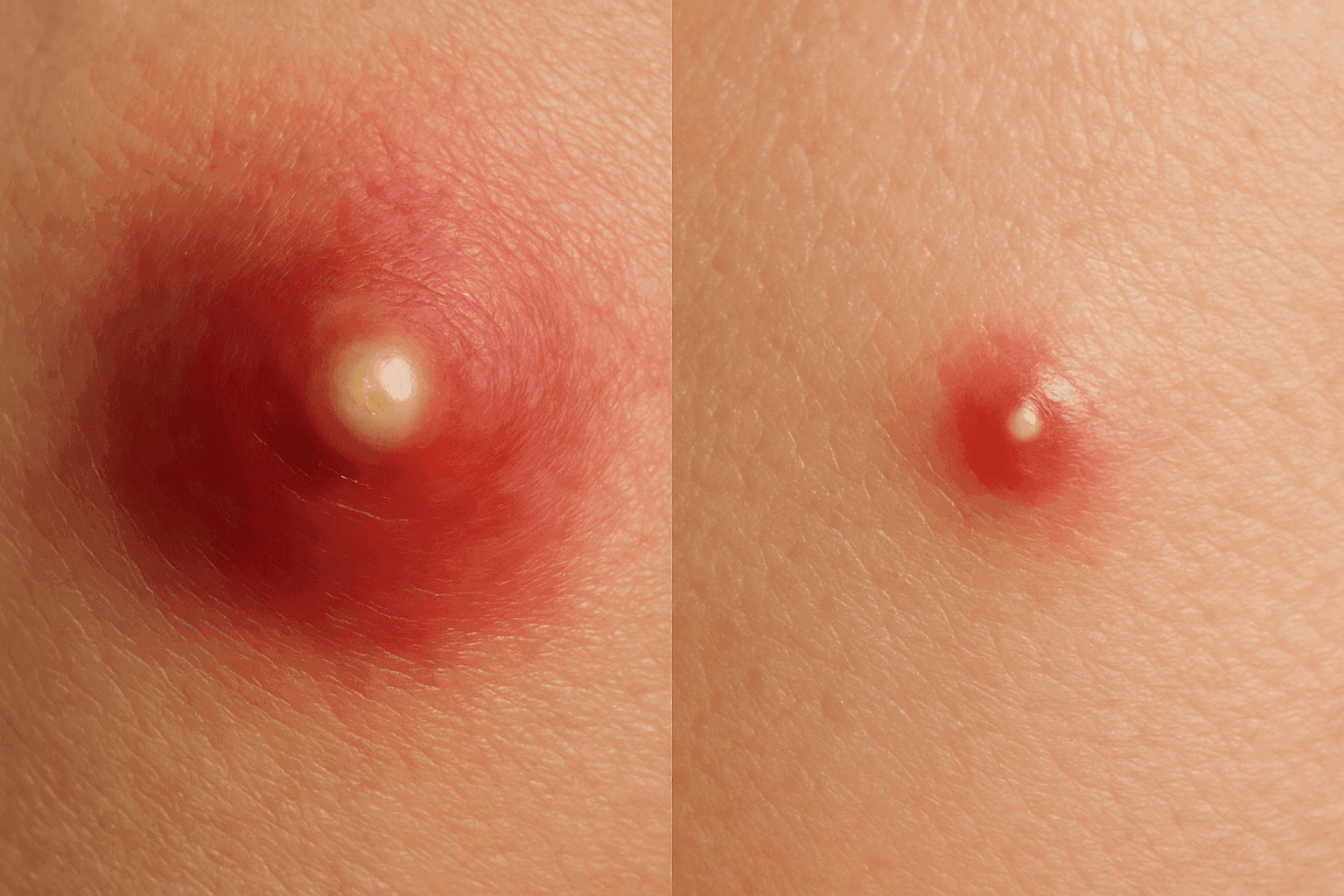
When It’s Not “Just a Pimple” Anymore
Most people can handle the occasional breakout - a whitehead here, a cyst there. But sometimes, what starts off feeling like a deep pimple rapidly becomes hot, painful, and impossible to ignore. That’s a sign it could be something else entirely: a boil.
While boils and pimples both show up as red, swollen lumps, they differ sharply in what causes them, how deep they go, and what kind of treatment they require. Misdiagnosing a boil as a regular breakout not only delays proper care - it can also lead to permanent skin damage or even spread infection to others.
Boil vs Pimple: Understanding the Basics
Boils, or furuncles, are deep bacterial infections of the hair follicle and surrounding skin. They usually start as painful red lumps and gradually fill with pus as the infection grows. Pimples, on the other hand, are caused by clogged pores filled with dead skin cells and oil, often mixed with Cutibacterium acnes bacteria.
Here’s a direct side-by-side:
| Feature | Boil | Pimple |
|---|---|---|
| Root Cause | Staph aureus bacterial infection | Pore clog + acne bacteria |
| Location Depth | Deeper, often under several skin layers | Shallower, near surface |
| Sensation | Throbbing, painful, hot to touch | Tender but manageable |
| Appearance | A swollen lump that grows may form a central head | Red bump, sometimes with visible whitehead |
| Common Sites | Armpits, thighs, buttocks, jawline, neck | Forehead, cheeks, back, chin |
| Healing Time | Slower; may need medical drainage | Often resolves with skincare |
| Contagious? | Yes, if untreated | No |
Spotting the Signs: Boil vs Breakout
One of the biggest giveaways is pain intensity and speed. Pimples tend to follow a slower progression - they may swell slightly, form a whitehead, and fade over a few days. Boils, however, escalate fast. Within 24–48 hours, they can double in size, become increasingly tender, and start to form a dense pus pocket.
You’ll also notice:
-
Boils often feel warm or hot to the touch
-
The skin around the boil might look stretched and shiny
-
Unlike acne, a boil rarely comes to a clean whitehead - and if it does, it might drain on its own, but not cleanly
If it hurts to even graze the skin or lie down on that side of your face, it’s probably not just a pimple.
Why Do Boils Even Happen?
Boils are caused by Staphylococcus aureus bacteria entering the skin - usually through a small cut, ingrown hair, or skin trauma. Once inside, they trigger an intense immune response that creates swelling and pus.
You're more likely to develop boils if:
-
You shave frequently (especially with dull blades)
-
You have poor wound hygiene
-
You sweat excessively
-
You reuse towels or razors
-
You have weakened immunity (due to illness, diabetes, or stress)
People often overlook one major contributor: barrier damage from over-exfoliation, harsh acne routines, or popping pimples. These micro-tears allow bacteria to slip in unnoticed.
Can Pimples Turn Into Boils?
Not directly - but they can set the stage.
If you pick at an inflamed pimple, introduce bacteria from your hands, or use unclean tools (like pimple extractors or makeup brushes), you increase the risk of secondary infection. What starts as a zit can become infected, evolve into a boil, and potentially spread.
How to Treat a Boil (Without Making It Worse)
Boils are stubborn. Acne actives like salicylic acid or benzoyl peroxide won’t touch them. The focus here is on drainage, hygiene, and if needed, antibiotics.
Safe at-home care (for small, isolated boils):
-
Apply a warm compress 2–3 times a day to encourage drainage
-
Keep the area clean with an antibacterial soap
-
Cover it loosely with clean gauze if it ruptures
-
Wash your hands thoroughly before and after touching it
What to avoid at all costs:
-
Don’t pop it - this can spread the infection deeper or cause scarring
-
Don’t treat it with acne spot creams - they may irritate the area further
-
Don’t share towels, razors, pillowcases, or face cloths
When to Seek Medical Help
Most boils clear up in about 7–10 days, but some require professional care.
Contact a doctor if:
-
The boil grows larger than 2 cm
-
It’s extremely painful or interferes with sleep
-
You have a fever or fatigue
-
You see red streaks radiating from the site
-
You’re getting multiple boils or recurring infections
Doctors may prescribe oral antibiotics or perform an incision and drainage (I&D) procedure to remove the core safely.
How Clear Ritual Helps Prevent Recurrence
Boils aren’t about "bad hygiene" - they’re about skin vulnerability.
At Clear Ritual, our acne-care routine is rooted in barrier support, not just oil control. We help you:
-
Avoid over-exfoliating, which weakens the skin’s natural defences
-
Keep breakouts clean and calm before they risk infection
-
Strengthen the microbiome and reduce inflammation
We don’t offer quick fixes - we offer rituals that build long-term resilience.
Need help figuring out if you’re dealing with a breakout, a boil, or something else entirely? [Take the Clear Ritual Skin Test] and get expert-backed guidance.
How to Tell Boils from Pimples
| Factor | Boil | Pimple |
|---|---|---|
| Depth | Deep under the skin | Surface-level follicle |
| Pain | Severe, throbbing | Mild to moderate |
| Bacteria | Staph aureus | C. acnes |
| Risk | Can spread or scar | Usually self-contained |
| Treatment | Warm compress, antibiotics | Topical acne actives |
| When to Worry | If it grows, spreads, or hurts badly | If it persists or scars |
| Prevention | Barrier care, hygiene, no picking | Oil control, exfoliation |
Frequently Asked Questions
1. How can I tell if a bump is a boil or just a pimple?
Boils are deeper, more painful, warm to the touch, and grow rapidly, while pimples are usually surface-level and less painful. Boils often worsen quickly and may come with swelling or fever.
2. Can a pimple turn into a boil?
A pimple doesn’t turn into a boil on its own, but picking, squeezing, or poor hygiene can introduce bacteria that cause a secondary infection, increasing the risk of a boil.
3. Are boils dangerous or contagious?
Boils can be contagious if untreated, as the bacteria can spread through skin contact or shared items like towels and razors. Severe or recurring boils require medical attention.
4. Should I treat a boil with acne products?
No. acne treatments like salicylic acid or benzoyl peroxide won’t treat boils and may irritate the area. Boils need warm compresses, hygiene, and sometimes antibiotics.
5. When should I see a doctor for a boil?
You should see a doctor if the boil is very painful, larger than 2 cm, accompanied by fever, spreading redness, or if you get recurrent boils.
Editorial Standards
Clear Ritual has Strict sourcing guidelines to ensure our content is accurate and current. We rely on peer-reviewed studies, academic research institutions, and medical associations. We strive to use primary sources and refrain from using tertiary references. See a mistake? Learn More about our Editorial Standards.
Related Articles
Best Face Wash for Pimples: What to Look For
Published May 26, 2026
Best Ingredients to Treat Pimples (Salicylic Acid, Benzoyl Peroxide, etc.)
Published June 7, 2026
Diet and Pimples: Foods That Trigger Breakouts
Published May 26, 2026
How Hormones Trigger Pimples: The Science Explained
Published May 26, 2026



