




Do You Have Fungal Acne? Here's How It's Different From Bacterial Breakouts
Those Tiny Bumps Aren’t Always Pimples
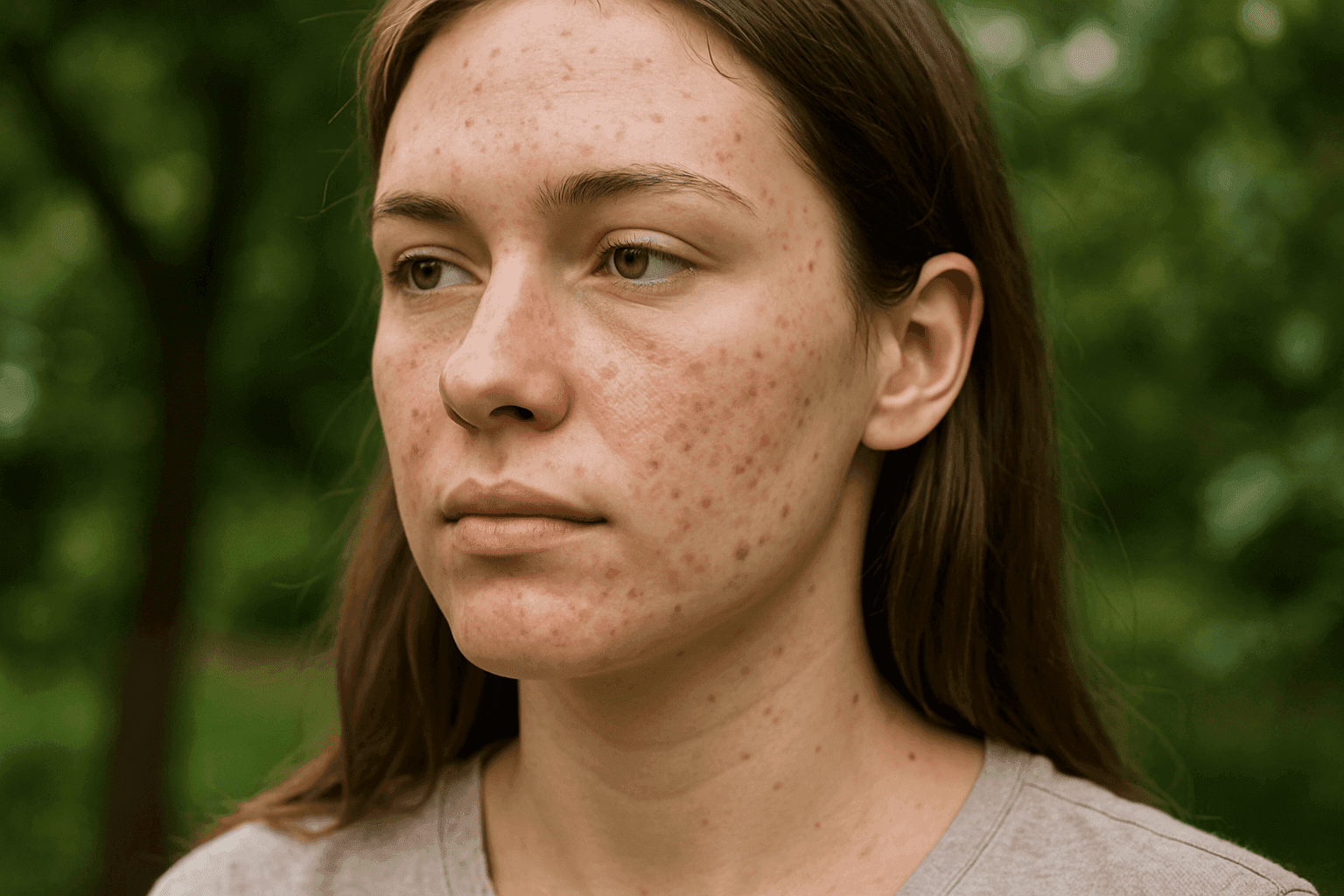
You’ve got small, red or white bumps across your forehead or cheeks. They itch a little. They’re not responding to your regular acne routine. In fact, the more you exfoliate or “dry them out,” the angrier they get.
Chances are, you’re not dealing with traditional acne at all. You might be dealing with fungal acne - more accurately known as Malassezia folliculitis.
It’s incredibly common. And incredibly misdiagnosed.
What Is Fungal Acne?
Despite its name, fungal acne isn't true acne. It’s not caused by clogged pores or oil - it’s caused by an overgrowth of yeast (specifically Malassezia) that naturally lives on your skin.
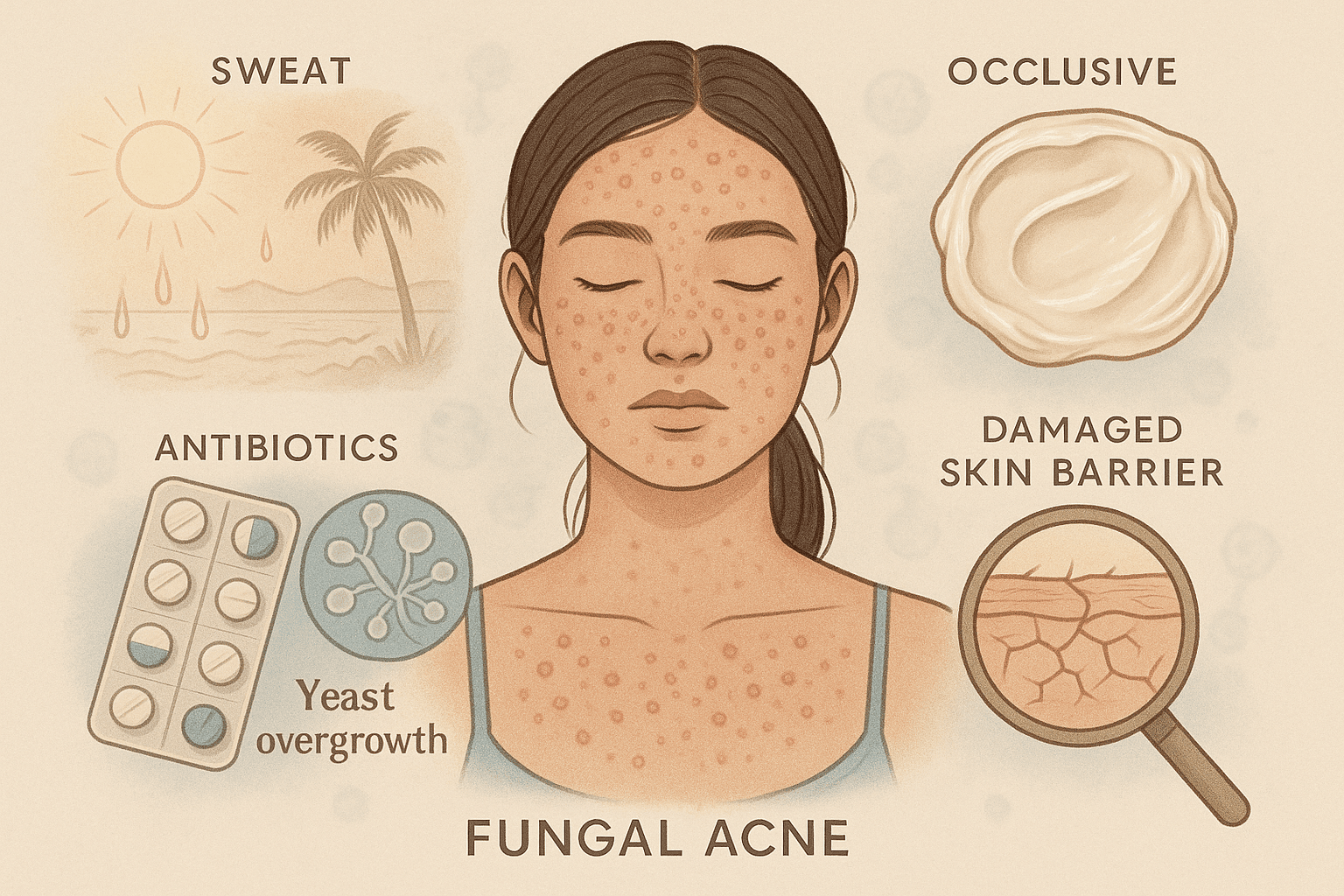
When this yeast grows out of control - usually due to humidity, sweat, antibiotics, or skincare products that disrupt your barrier - it causes:
- Inflammation of the hair follicles
- Clusters of red or white bumps
- Itching, burning, or sensitivity
The tricky part? It looks like acne - but behaves very differently.
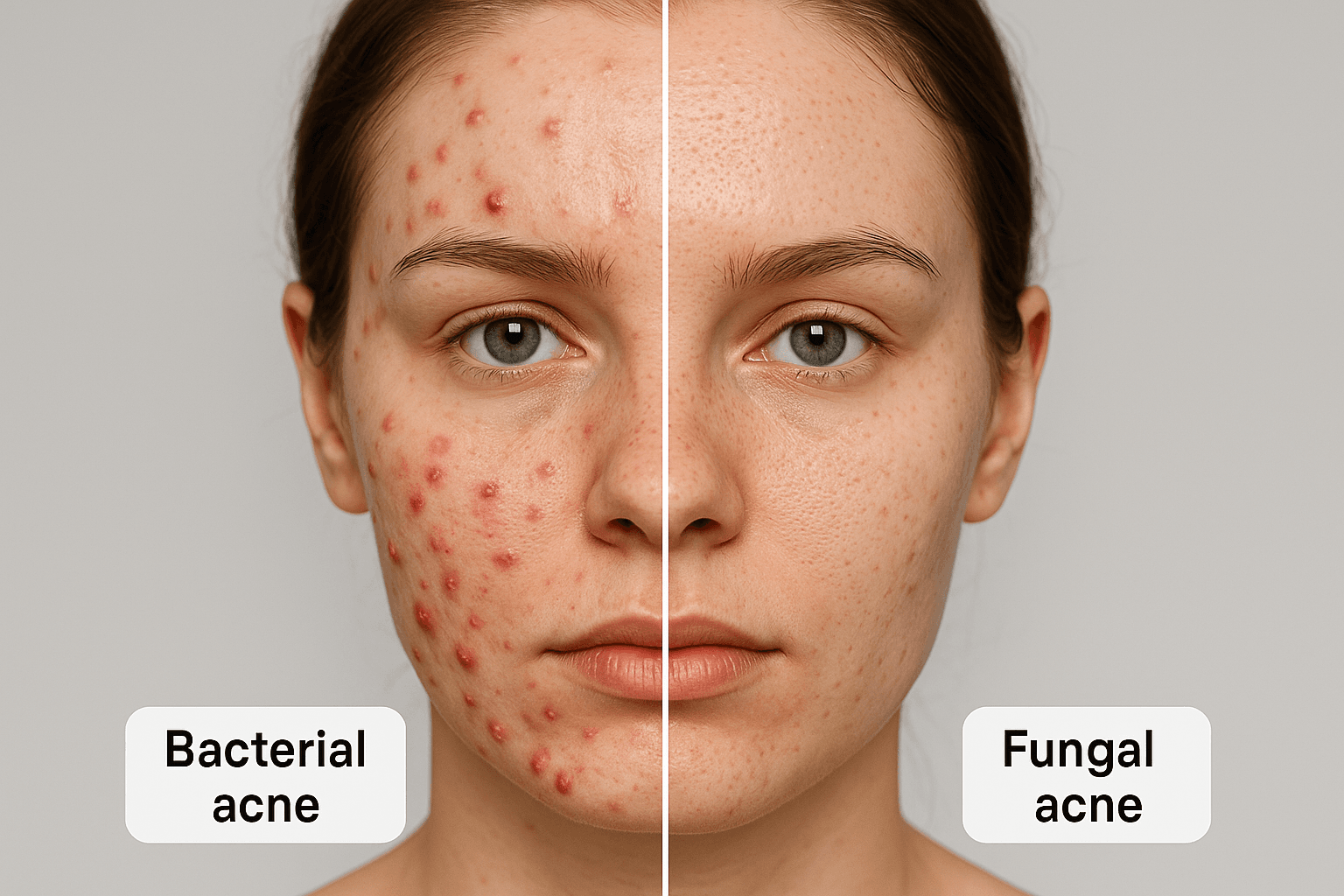
Fungal vs Bacterial Acne: Spot the Difference
| Feature | Fungal Acne | Bacterial Acne | ||||||||||||||||||||||||||||
|---|---|---|---|---|---|---|---|---|---|---|---|---|---|---|---|---|---|---|---|---|---|---|---|---|---|---|---|---|---|---|
| Cause | Yeast (Malassezia) | Bacteria (C. acnes) | ||||||||||||||||||||||||||||
| Appearance | Uniform small bumps (often itchy) | Mix of [whiteheads](https://clearritual.com/blog/types-of-acne/all-about-whiteheads), cysts, [blackheads](https://clearritual.com/blog/types-of-acne/all-about-blackheads) | ||||||||||||||||||||||||||||
| Location | Forehead, temples, chest, back | Jawline, cheeks, forehead | ||||||||||||||||||||||||||||
| Response to Acne Products | Worsens | Improves | ||||||||||||||||||||||||||||
| Triggers | Heat, sweat, antibiotics, occlusive skincare | H
If you’ve used acne treatments like salicylic acid or benzoyl peroxide and things are getting worse, fungal acne could be the reason.
Common Fungal Acne TriggersSeveral factors can throw off your skin’s fungal balance: 1. Sweating and HumidityMalassezia thrives in warm, moist environments - making sweaty skin, tight clothing, and humid climates major triggers. 2. Occlusive Skincare ProductsHeavy moisturisers, face oils, and sunscreens with esters or polysorbates can feed yeast. Fungal acne doesn't like oils - it feeds on them. 3. Antibiotic UseOral or topical antibiotics kill bacteria - but not yeast. This can shift your skin’s balance and let fungi overgrow. 4. Weakened Skin BarrierOver-exfoliation, stripping cleansers, or strong actives can make your skin vulnerable to both fungal and bacterial overgrowth. How to Know for Sure (and What to Do Next)Fungal acne often flares in clusters - not single Pimples - and doesn’t form blackheads or deep cysts. It may feel itchy, tingly, or oddly reactive to products that previously worked fine. If you suspect it:
Ingredients That Help Fungal Acne
How to use:
Avoid:
Why Fungal Acne Gets MisdiagnosedMost people (and even some professionals) mistake fungal acne for:
This leads to the wrong treatments - exfoliants, acids, antibiotics - all of which worsen the fungal imbalance. If your breakouts flare every time you sweat, wear makeup, or travel to humid climates… fungal acne is a possibility worth exploring. Clear Ritual’s Perspective on Fungal AcneWe don’t assume all breakouts are the same. Fungal acne needs a barrier-focused, antifungal-aware approach - not just stronger “acne” products. What we prioritise:
We keep it simple, soothing, and customised to your breakout pattern. Not sure if you’re dealing with fungal acne? [Take the Skin Test] - we’ll help decode your bumps and suggest the right approach. Bumps Might Not Be Acne
1. What is fungal acne and how is it different from acne?Fungal acne is caused by yeast overgrowth in hair follicles, not clogged pores or bacteria. It appears as small, uniform, often itchy bumps and reacts poorly to typical acne treatments. 2. Why do acne products make fungal acne worse?Ingredients like salicylic acid, benzoyl peroxide, exfoliants, and antibiotics don’t kill yeast. Some even damage the skin barrier or feed fungal growth, worsening breakouts. 3. How can I tell if my bumps are fungal acne?Fungal acne tends to appear in clusters, itch or tingle, flare with sweat or humidity, and doesn’t form blackheads or deep cysts. 4. What ingredients actually help treat fungal acne?Antifungal ingredients like zinc pyrithione, selenium sulfide, ketoconazole, and sulfur help reduce yeast overgrowth and calm inflammation. 5. Can fungal acne come back after treatment?Yes. Without barrier repair and fungal-safe skincare, triggers like sweat, occlusive products, or antibiotics can cause fungal acne to recur. |
Editorial Standards
Clear Ritual has Strict sourcing guidelines to ensure our content is accurate and current. We rely on peer-reviewed studies, academic research institutions, and medical associations. We strive to use primary sources and refrain from using tertiary references. See a mistake? Learn More about our Editorial Standards.



