




How to Deal With Acne Scars the Right Way
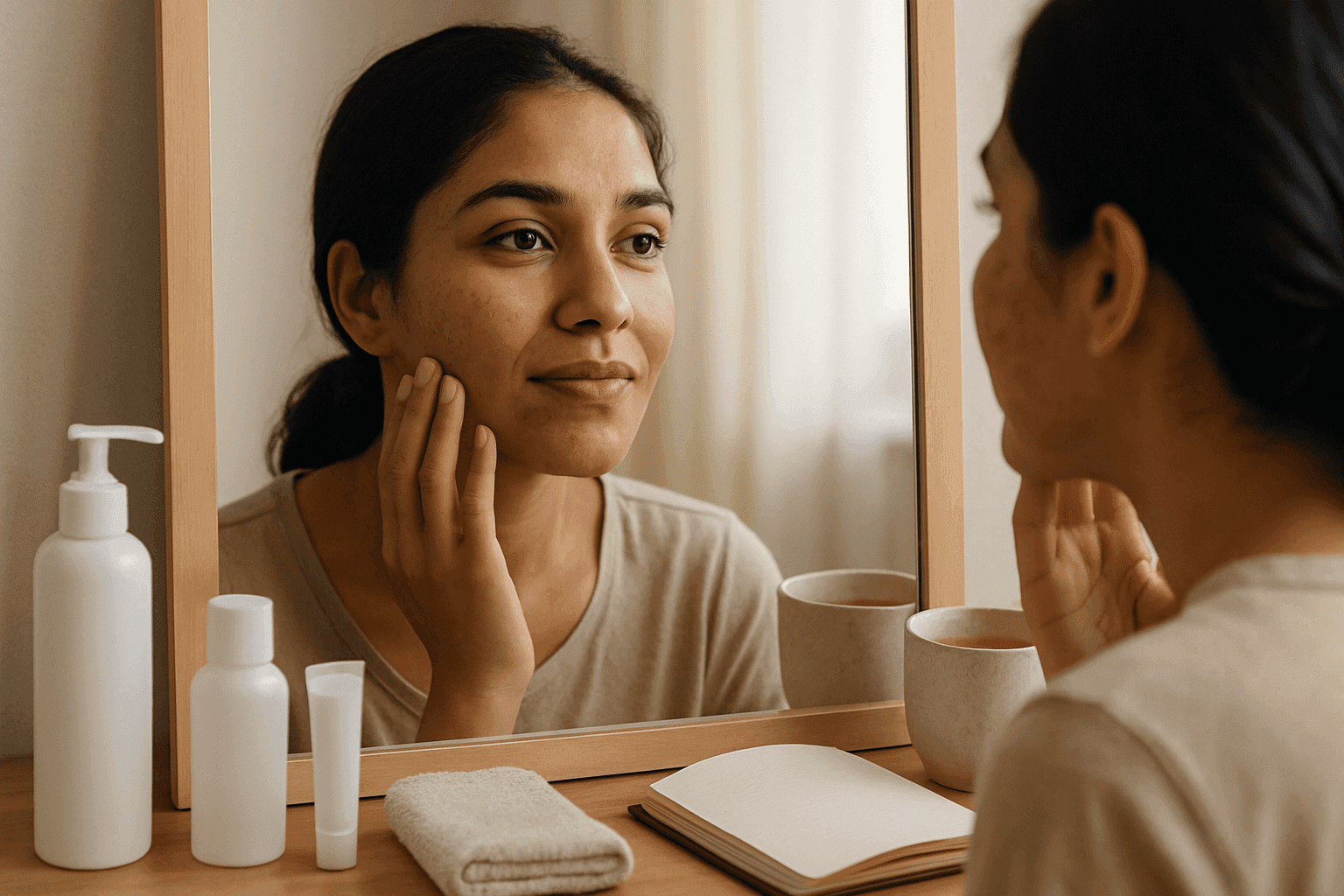
Your Acne Cleared - So Why Are the Marks Still There?
You finally beat a breakout. The swelling’s gone, the redness has faded - but now you’re left with something else: Dark spots. Uneven texture. Tiny dents that don’t go away.
This is the second phase of acne - one that isn’t talked about enough. And while it’s tempting to jump into high-strength treatments, real scar healing requires clarity and patience.
Before you treat it, you need to identify what kind of scar you’re dealing with - because pigment is not the same as a dent, and treating them as one only wastes time (and money).
Step One: Know Your Scar Type
Acne after-effects are broadly divided into two categories:
| Type | What It Means | Appearance | | ----- | ----- | ----- | | PIH (Post-Inflammatory Hyperpigmentation) | Discolouration left behind after a healed pimple | Flat, brown or red marks | | Atrophic Scars | Loss of tissue after deep inflammation | Indents or pits in the skin | | Hypertrophic Scars | Excess collagen from healing | Raised, thickened scars |
Let’s break these down further.
1. PIH (Post-Inflammatory Hyperpigmentation)
This isn’t a scar in the classic sense - it’s pigment left behind due to inflammation. It’s more common in:
- Medium to deep skin tones
- People who pick at their Pimples
- Those exposed to the sun while healing
These marks tend to fade over time - but can take 3–6 months without help.
What helps:
- Sunscreen (non-negotiable)
- Azelaic acid, niacinamide, or alpha arbutin
- Gentle exfoliation to speed up turnover
What doesn’t help:
- Scrubbing, lemon juice, DIY pastes - these often make things worse
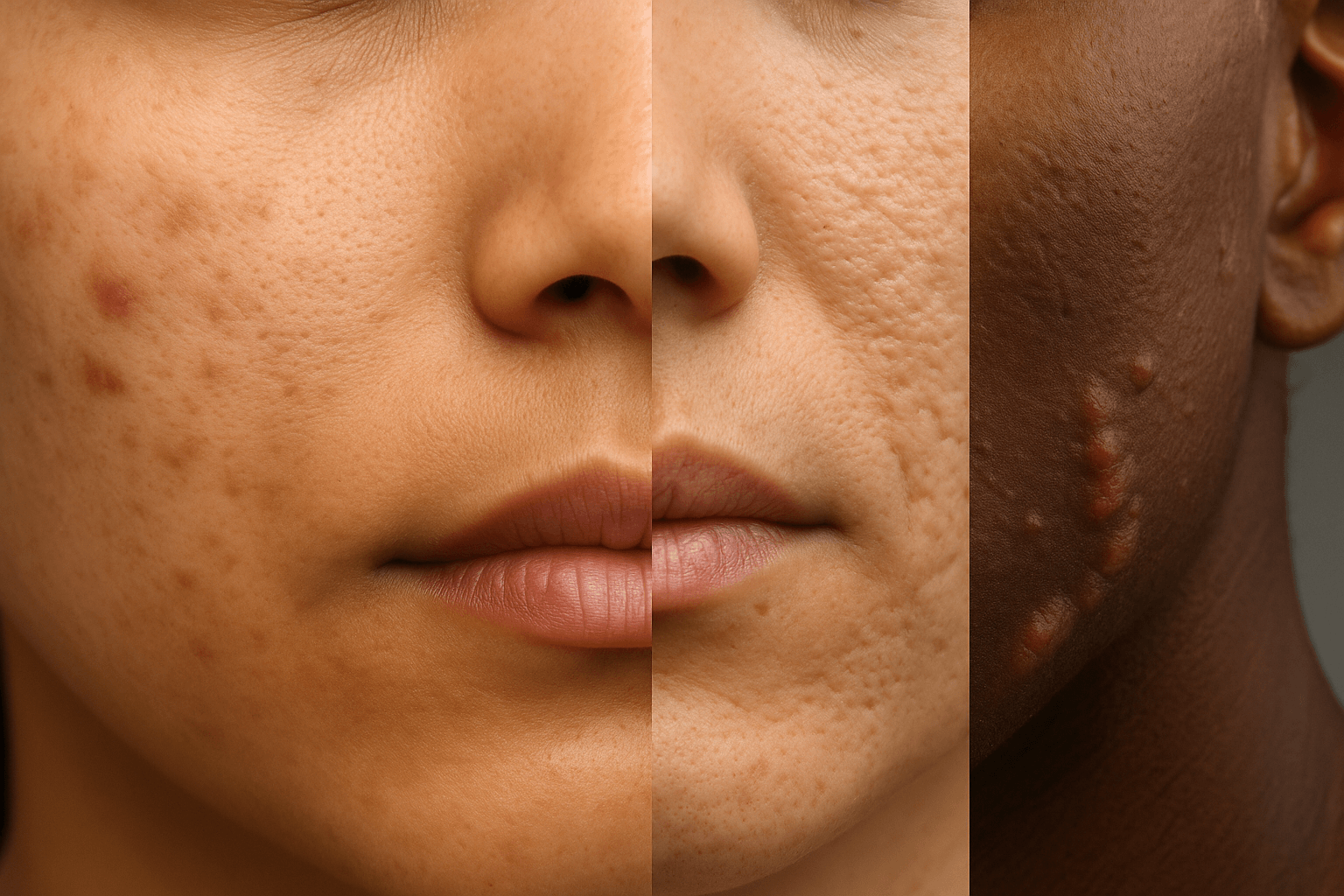
2. Atrophic or Indented Scars
These are the ones most people fear - actual dents in the skin left after severe or Cystic Acne.
Common types:
- Ice pick scars: narrow, deep holes
- Rolling scars: shallow dips with soft edges
- Boxcar scars: wider, more defined depressions
These scars result from collagen loss after intense inflammation damages the skin’s support structure.
Topicals can improve texture slightly, but deeper scars often need professional intervention.
What helps:
- Retinoids (over time, they boost collagen)
- Microneedling, subcision, or laser (done by trained professionals)
- Patience + a good skincare base
3. Raised or Hypertrophic Scars
More common on the chest, back, or jawline, these scars form when your skin over-produces collagen during healing.
They can feel hard, itchy, or appear reddish in early stages.
What helps:
- Silicone gels or patches
- Prescription corticosteroids
- In-clinic steroid injections or cryotherapy
These are the least responsive to over-the-counter treatments - and trying to “scrub them flat” will only make them worse.
So… What Can You Do at Home?
For mild to moderate marks, consistent skincare can help significantly.
The 3 key ingredients for scar recovery:
| Ingredient | Function | | ----- | ----- | | Niacinamide (5%) | Fades pigmentation, strengthens barrier, calms inflammation | | Retinoids | Boosts collagen, improves texture and tone | | Azelaic Acid | Treats pigmentation and redness, especially in sensitive skin |
Consistency matters more than concentration. Scar healing takes time - and stopping mid-way resets the process.
When to Consider Professional Help
If your scars:
- Are deep, textured, or worsening over time
- Haven’t improved after 3–4 months of routine care
- Are you making you feel self-conscious or anxious
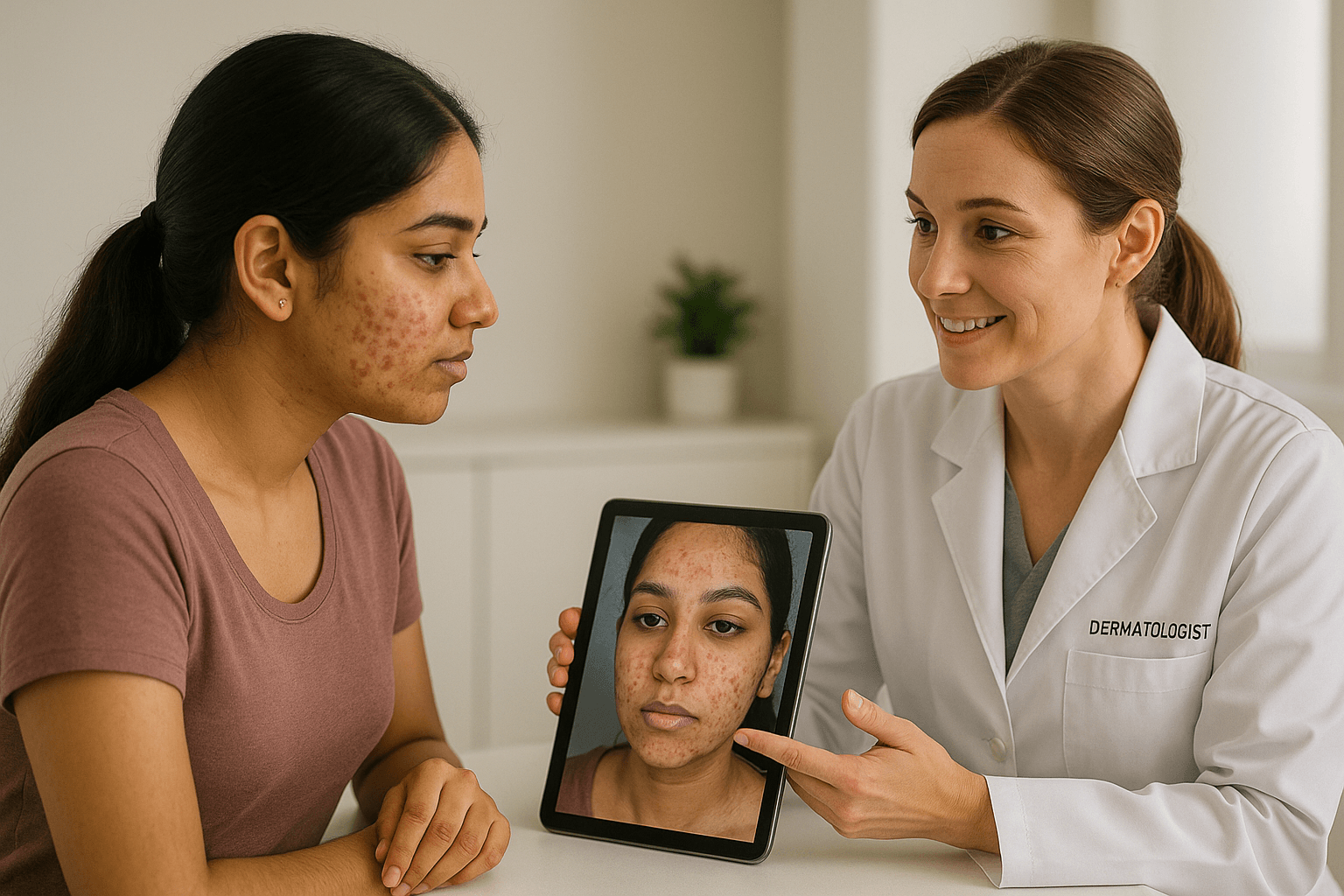
…it may be time to visit a dermatologist or aesthetic practitioner.
Options that actually work (when done right):
- Microneedling – encourages new collagen production
- Fractional laser resurfacing – for deep texture improvement
- Chemical peels – for surface pigment and mild texture
- Subcision – for rolling scars or tethered dents
What doesn’t work? Over-the-counter “scar creams” that promise miracles in 7 days. They usually just moisturise - and not much else.
Clear Ritual’s Philosophy on Scar Healing
We don’t promise overnight miracles. But we do believe in:
- Targeted, calming skincare that supports recovery at every level
- Barrier-first routines that prep skin for more intensive care (if needed)
- Helping you move from “panic routines” to long-term healing cycles
Whether your concern is dark spots, uneven tone, or deeper texture, your skin can improve. But it needs consistency, not aggression.
Start by building the right base. [Take the Skin Test] to get a routine aligned with your skin’s healing goals.
Scar Types and What Helps
| Scar Type | Appearance | Treatment | | ----- | ----- | ----- | | PIH | Flat brown/red marks | Sunscreen, azelaic acid, niacinamide | | Atrophic | Indents or pits | Retinoids, microneedling, collagen-boosting treatments | | Hypertrophic | Raised, thickened scars | Silicone, steroids, in-clinic procedures |
1. What’s the difference between acne scars and dark marks?
Dark marks (PIH) are flat pigment changes left after inflammation, while acne scars involve permanent texture changes due to collagen loss or excess.
2. Do acne scars fade on their own?
Pigmentation marks may fade over time, but true atrophic or raised scars usually need targeted treatments and don’t disappear without intervention.
3. Which ingredients help fade acne marks and scars?
Niacinamide, azelaic acid, and retinoids help fade marks and improve texture, while sunscreen is essential to prevent scars from worsening.
4. When should I see a dermatologist for acne scars?
If scars are deep, textured, or haven’t improved after 3–4 months of consistent skincare, professional treatments may be more effective.
5. Do over-the-counter scar creams really work?
Most OTC scar creams offer minimal improvement. They may hydrate skin but can’t significantly change deep scars or dents.
Editorial Standards
Clear Ritual has Strict sourcing guidelines to ensure our content is accurate and current. We rely on peer-reviewed studies, academic research institutions, and medical associations. We strive to use primary sources and refrain from using tertiary references. See a mistake? Learn More about our Editorial Standards.



